Private Label Caffeine Gummies
Product specifications and sourcing information.
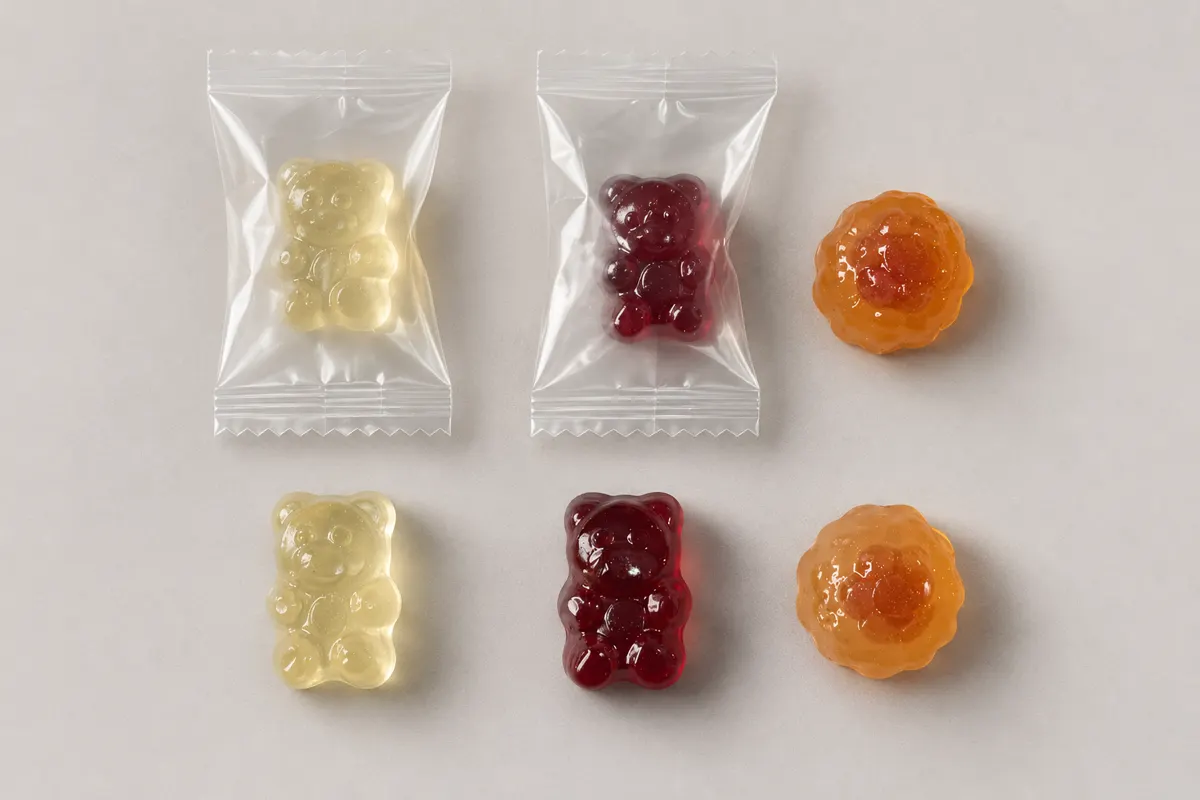
Private label Caffeine Gummies are available for custom OEM development with a target of no more than 50 mg caffeine per gummy and a 500 kg minimum order per SKU. The exact dose, piece weight, recipe, shape and retail pack are fixed in an approved product brief, not inferred from the image.
This format gives brands an edible alternative to our Caffeine Pouches and Caffeine ODF. The right choice depends on how customers use the product, the intended market and the testing and labeling needed for that market.
| Project parameter | Current offer | What the buyer should confirm |
|---|---|---|
| Product format | Edible caffeine gummy | Target market and product classification |
| Caffeine target | Up to 50 mg per piece | Exact mg per gummy and maximum intended serving |
| Custom MOQ | 500 kg per SKU | Piece weight and proposed retail units for unit-count estimate |
| Appearance | Shape and color to be developed | Approved sample, permitted colors and stability |
| Packaging | To be scoped in the brief | Primary pack, count per unit, barrier and labeling space |
MOQ means finished mass, not a fixed number of gummies or retail packs. For example, the piece count cannot be calculated until the approved piece weight and manufacturing yield are known. A second caffeine strength or distinct formula is another SKU and needs its own quotation.
The first decision is the caffeine target per piece. A 50 mg ceiling is a customization limit, not a recommended serving size or a statement that every market permits the same label. The development brief should also define piece weight, sweetener system, desired texture, ingredient exclusions and the proposed total daily intake from all caffeine sources.
A gummy should be approved against a written finished-product specification. For a caffeine project, the practical release questions are whether the measured caffeine amount matches the declared target and whether pieces remain consistent after production and storage. Appearance, average weight, texture, microbial limits and packaging seals also need project-specific limits.
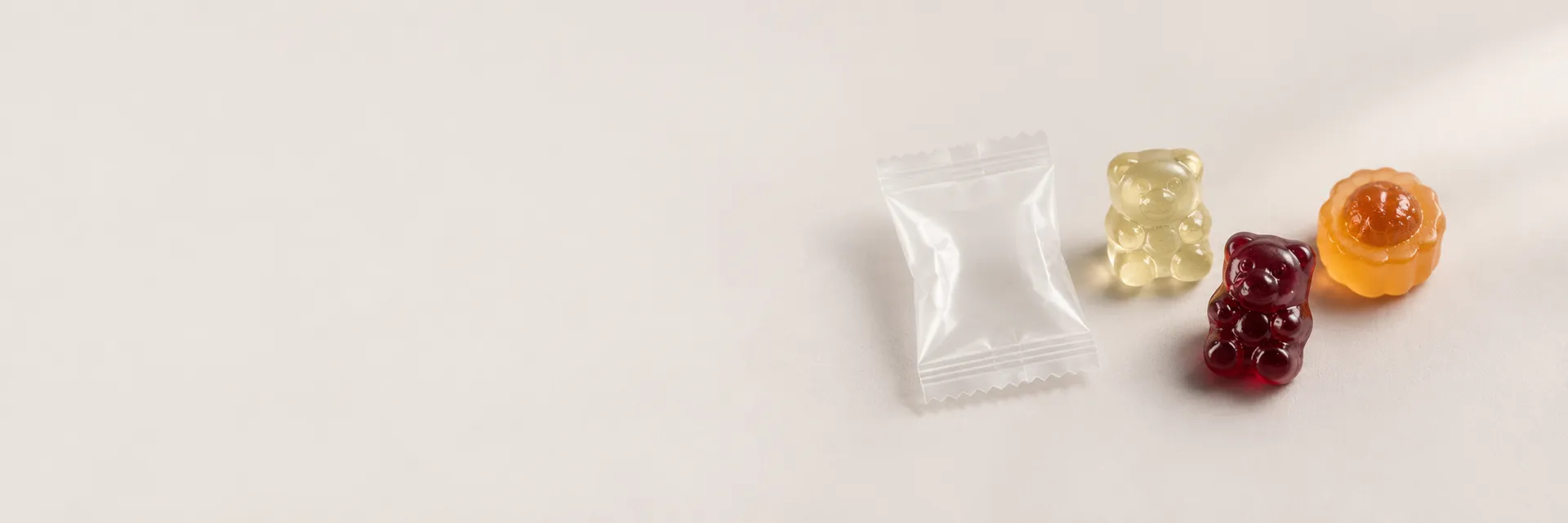
For an individually wrapped concept, test the wrapper as part of the product, not as an afterthought. Sealing, handling damage, moisture exchange and label legibility should be checked on physical samples. The sample image shows possible forms; it is not evidence of a validated barrier structure or stability period.
Need help comparing formats? See the oral pouches vs ODF guide, our OEM sample-request checklist, or contact the team with your gummy brief.
Caffeine is found across foods, beverages and supplements, so serving instructions should consider the buyer’s complete caffeine-use scenario. The US FDA notes that caffeine can be added to many products and that dietary supplements may be sold as gummies. Formula, warnings, age suitability and advertising claims require review for the destination market before sale. This page does not claim regulatory approval or medical benefit.
References: US FDA: Spilling the Beans—How Much Caffeine is Too Much?; US FDA: Questions and Answers on Dietary Supplements; EFSA: Caffeine topic. Reviewed November 16, 2026.
A custom specification may target up to 50 mg of caffeine per gummy. The final labeled amount must be supported by formulation work, finished-product assay and the rules of the destination market.
The minimum custom production order is 500 kg for each SKU. Different formulas, shapes or other SKU-defining specifications are quoted separately.
These are development options, not fixed specifications. Shape, color system and packaging must be checked for feasibility, stability and the requirements of the target market before approval.
No. The image is an illustrative visualization based on a supplied sample photograph; it does not establish a caffeine dose, flavor, ingredient list or released commercial SKU.