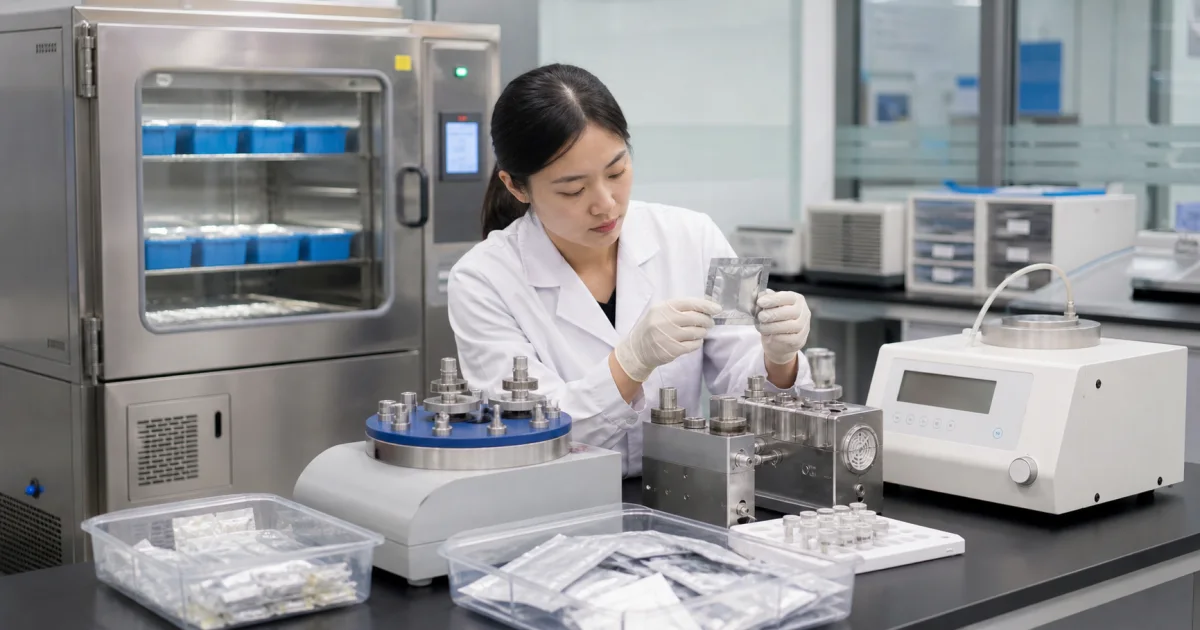
A standard caffeine ODF is designed to disperse quickly; it should not automatically be called sustained-release or “crash-free.” A credible extended-energy concept needs deliberate formulation, conservative language and product-specific performance evidence.
This 2026 guide is for private-label buyers, importers and product teams. It is educational rather than medical advice. All oral pouch concepts discussed are nicotine-free and tobacco-free.
Quick technical decision table
| Development area | Decision | Evidence |
|---|---|---|
| Formula | Ingredient fit and target amount | Specification and feasibility review |
| Process | Critical parameters and limits | Pilot records and in-process data |
| Quality | Label-to-product consistency | Assay, uniformity and stability |
| Market | Classification and claims | Destination-market review |
Dose and ingredient design
Total caffeine must include synthetic caffeine plus any botanical contribution. L-theanine or standardized tea and guarana ingredients may support brand positioning, but they do not guarantee a particular energy curve or eliminate individual sensitivity.
ODF feasibility
Film has limited loading capacity, and caffeine bitterness requires masking. Increasing polymer or using particles to modify release can change thickness, mouthfeel and disintegration. The intended mechanism must remain compatible with safe oral use and manufacturing consistency.
Evidence and labels
Use finished-unit HPLC assay, content uniformity, disintegration, stability and appropriate performance studies. Declare caffeine per film and serving limits, identify sensitive groups and avoid encouraging combination with other caffeinated products.
OEM buyer checklist
- Confirm ingredient permission and product classification in each target market.
- Approve measurable formula, process and finished-product specifications.
- Review raw-material identity, purity, allergens and contaminant controls.
- Validate unit uniformity, microbiology, packaging and shelf life.
- Complete claims and artwork review before commercial printing.
Frequently Asked Questions
Can one specification be used in every country?
No. Ingredient, dose, label, warning and claim rules differ by market.
What makes an OEM sample ready for scale-up?
The sample must match an approved written specification and pass relevant analytical, sensory and packaging checks.
Should brands promise faster absorption?
Only when product-specific evidence supports the exact claim and local rules permit it.
Where can buyers learn more?
Review the 2026 sourcing guide, the ODF manufacturing guide, Caffeine ODF and OEM consultation.
Compliance note: Regulations can change. Verify current requirements before manufacture, import or sale.