Updated: September 29, 2026
How private-label brands should assess an ISO/IEC 17025 laboratory for caffeine pouch HPLC testing, including accreditation scope, method suitability, sampling and chain of custody.
Quick answer
Choose a laboratory by the accredited scope and the exact work it will perform—not by an ISO/IEC 17025 logo alone. Confirm that the accreditation schedule covers the relevant analytical field, that the laboratory has a suitable caffeine method for the oral-pouch matrix, and that it can document sample receipt, preparation, calibration, quality controls, measurement units and reporting. The manufacturer and buyer should agree who selects samples, how units are sealed and identified, and how results will be handled before testing begins.
Buyer decision summary
| Decision | What to verify |
|---|---|
| Product identity | Exact formula, SKU, batch and commercial packaging |
| Evidence | Approved specification, lot-linked COA and supporting reports |
| Boundary | Market classification, test scope and claims must be project-specific |
| Change control | Reassess after material, supplier, formula, process or package changes |
ISO/IEC 17025 accreditation is method- and scope-specific
ISO/IEC 17025 addresses laboratory competence, impartiality and consistent operation, but accreditation is granted for a defined scope. A laboratory may be accredited for water, cannabis, environmental or pharmaceutical tests without having caffeine in an oral-pouch matrix inside its accredited schedule. Ask for the current certificate, issuing accreditation body and detailed scope, then match the method, analyte and matrix to the requested work. If the caffeine method is outside scope, the laboratory should state that clearly on the quotation and report. Out-of-scope work may still be technically useful, but buyers should not describe it as accredited. This distinction matters when results will support importer files, retailer onboarding, Amazon documentation or a label claim.
- Verify certificate status with the accreditation body
- Read the annex or schedule, not only the front-page certificate
- Match analyte, technique and matrix
- Confirm whether subcontracted tests are identified
Ask whether the HPLC method is suitable for the pouch matrix
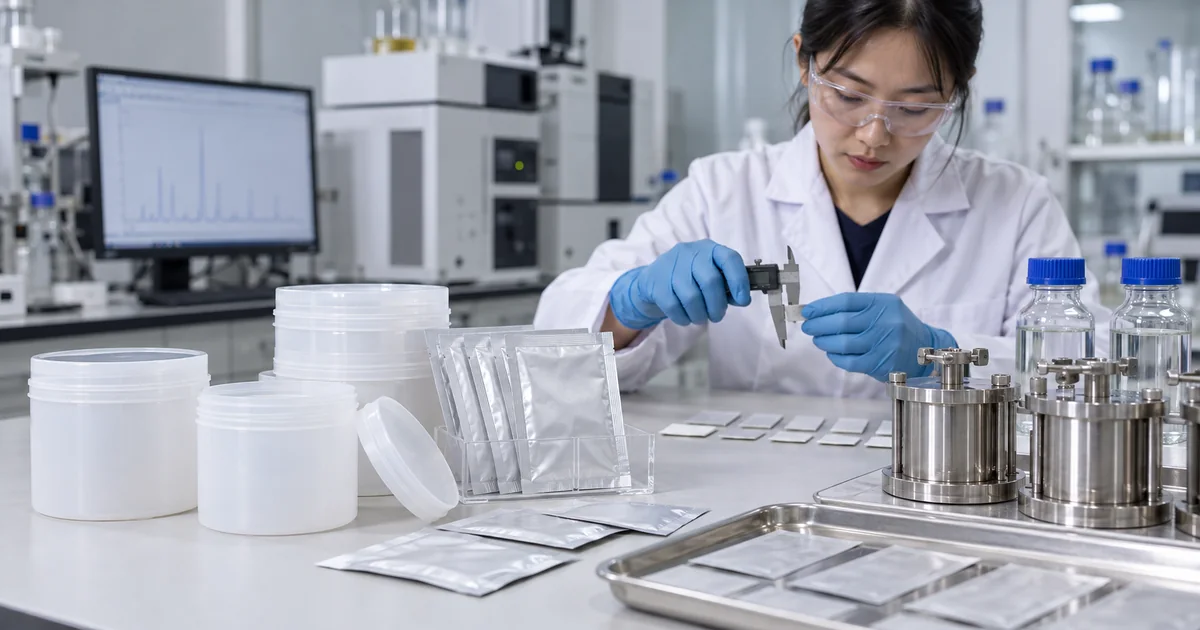
Caffeine is measurable by several chromatographic approaches, but sample preparation determines whether the method recovers caffeine accurately from fibers, humectants, flavors, sweeteners and botanical extracts. Request a method reference and a concise suitability summary covering specificity, calibration range, recovery, precision, dilution, filtration and reporting limit. A standard method developed for beverages may require verification or adaptation before it is used for dry or moist oral pouches. Guarana formulas require special care because caffeine comes from a botanical extract and co-extractives may affect chromatography. The result should be reported per pouch or clearly convertible using a verified unit weight, not only as a concentration in an extract solution.
- Defined sample mass or number of pouches
- Representative extraction and recovery study
- Calibration and quality-control samples
- Clear result units and uncertainty where relevant
- Documented treatment of guarana and other caffeine sources
Design the sampling plan before shipping samples
A precise laboratory result cannot correct a biased sample. Decide whether the purpose is prototype screening, batch-release verification, label-claim confirmation, stability testing or an investigation. Samples should represent the batch across time or locations rather than come only from the easiest carton to reach. Record lot number, production date, SKU, caffeine target, package condition and sampler identity. For content-uniformity questions, a composite result is insufficient because pooling can hide unit-to-unit variation. Keep sealed reserve units under controlled conditions. If an independent result may trigger release rejection or recall action, define confirmatory testing and notification responsibilities in advance.
- Purpose of test and decision rule
- Random or stratified batch locations
- Individual versus composite units
- Reserve and duplicate samples
- Agreed sample quantity and storage conditions
Maintain chain of custody and protect sample integrity
Chain of custody shows who controlled the samples from selection through laboratory receipt and disposal. Use tamper-evident packaging, unique sample identifiers and a submission form that does not rely on handwritten product names alone. Record the courier, shipping temperature when relevant, package condition and receipt date. The laboratory should document any discrepancy, broken seal, insufficient quantity or damaged can before analysis. Photographs can help resolve disputes. Avoid sending unlabeled loose pouches in an ordinary bag because moisture and aroma can change during transit. The final report should identify the sample exactly as received and link every result to the correct lot and method version.
- Unique sample and seal numbers
- Lot and SKU identifiers
- Shipping and receipt condition
- Custody signatures or electronic audit trail
- Retention and disposal instructions
Read the report beyond the final caffeine number
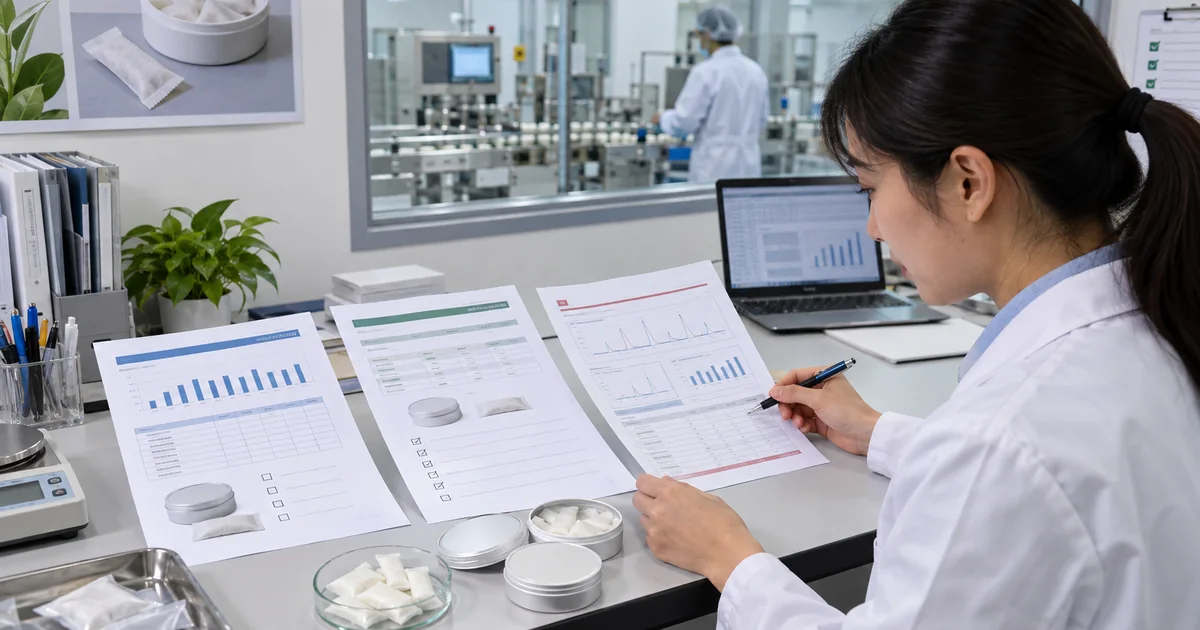
Review the laboratory name and address, report number, client, sample description, receipt and test dates, method, result units, authorized signatory and any qualification or deviation. Compare the result with a pre-agreed specification rather than deciding after seeing the number. A report close to a limit may require evaluation of method uncertainty, manufacturing variation and additional units. The third-party report does not replace the manufacturer’s batch record, in-process controls or COA; it provides an independent evidence point. Brands should trend results across lots and investigate systematic bias between the factory and external laboratory instead of treating each report as an isolated certificate.
- Correct identity and batch traceability
- Accredited-status marker for each test
- Method version and result units
- Deviations, qualifiers and uncertainty statements
- Authorized approval and report authenticity
Related technical guides
- third-party HPLC testing guide
- low- versus high-dose caffeine pouches
- batch traceability guide
- 2026 nicotine-free oral pouch sourcing guide
Frequently asked questions
Is an ISO/IEC 17025 certificate enough?
No. Review the laboratory’s current accreditation scope to confirm the relevant method, analyte and testing field are covered.
Must caffeine pouch HPLC be accredited?
Requirements depend on the market and purpose. If accreditation is claimed, verify that the reported test is actually within scope.
Should the factory or brand choose the samples?
For independent verification, use a documented plan that prevents convenient sample selection and preserves batch representation.
Can one composite result prove content uniformity?
No. A composite may estimate an average but can hide variation between individual pouches.
Sources and scope
This B2B article explains sourcing, manufacturing and quality decisions. It is not medical or legal advice. Requirements depend on the formula, claims, dosage form and destination market.
Planning a private-label project? Send Linkbiolabs your target market, formula brief, packaging format and forecast for a project-specific review.
{“@context”:”https://schema.org”,”@type”:”FAQPage”,”mainEntity”:[{“@type”:”Question”,”name”:”Is an ISO/IEC 17025 certificate enough?”,”acceptedAnswer”:{“@type”:”Answer”,”text”:”No. Review the laboratory’s current accreditation scope to confirm the relevant method, analyte and testing field are covered.”}},{“@type”:”Question”,”name”:”Must caffeine pouch HPLC be accredited?”,”acceptedAnswer”:{“@type”:”Answer”,”text”:”Requirements depend on the market and purpose. If accreditation is claimed, verify that the reported test is actually within scope.”}},{“@type”:”Question”,”name”:”Should the factory or brand choose the samples?”,”acceptedAnswer”:{“@type”:”Answer”,”text”:”For independent verification, use a documented plan that prevents convenient sample selection and preserves batch representation.”}},{“@type”:”Question”,”name”:”Can one composite result prove content uniformity?”,”acceptedAnswer”:{“@type”:”Answer”,”text”:”No. A composite may estimate an average but can hide variation between individual pouches.”}}]}