Updated: September 29, 2026
A technical guide to preventing ODF casting bubbles through mixing control, vacuum degassing, solution viscosity, coating settings, drying and web inspection.
Quick answer
ODF bubbles are usually a process-and-formulation interaction, not a defect that vacuum alone can solve. Air may enter during powder addition, high-speed mixing, transfer or coating; high viscosity can trap it; and rapid surface drying can lock bubbles inside the film. Control begins with the order and shear of mixing, hydration time and temperature, followed by a validated deaeration step, low-foam transfer and stable coating bead. Inspect the wet web and dried film separately because bubbles, pits and pinholes can appear at different stages.
Buyer decision summary
| Decision | What to verify |
|---|---|
| Product identity | Exact formula, SKU, batch and commercial packaging |
| Evidence | Approved specification, lot-linked COA and supporting reports |
| Boundary | Market classification, test scope and claims must be project-specific |
| Change control | Reassess after material, supplier, formula, process or package changes |
Identify where air enters the ODF solution
Map the process from liquid charging through polymer hydration, active dispersion, flavor addition, holding, transfer and coating. Vortexing during high-speed mixing can draw air into the batch, while powder addition can carry air below the surface. Some surfactants, flavors, proteins or botanical extracts stabilize foam, making bubbles slow to rise. Recirculation pumps, leaking seals and splashing transfer lines can reintroduce air after a successful degassing step. Record impeller type, speed, fill level, addition rate, temperature and hold time during development. A photograph of the vessel surface is useful, but small entrained bubbles require density, microscopy or a controlled observation method. Fix the point of air entry before extending vacuum time indefinitely.
- Control vortex depth and powder-addition rate
- Submerge return lines and minimize splashing
- Check pump seals and recirculation design
- Separate foam from microscopic entrained air
Balance viscosity for deaeration and coating
Viscosity must be high enough to suspend ingredients and form a stable coating bead, but excessive viscosity slows bubble rise and makes vacuum expansion difficult to manage. Measure viscosity with a defined instrument, spindle or geometry, speed and temperature because a single number without conditions is not reproducible. Many film solutions are shear-thinning, so mixing viscosity and low-shear holding behavior can differ. Polymer grade, concentration, hydration and plasticizer level all matter. Establish an operating window rather than a single target, then relate it to coat weight, web uniformity, bubble count and content uniformity. Do not dilute an out-of-range batch casually; added solvent changes solids, dose per area and drying demand.
- Defined rheology method and temperature
- Polymer hydration endpoint
- Solids content and density
- Coating speed and target wet thickness
- Link viscosity to bubble and uniformity data
Validate vacuum degassing instead of using a timer alone
A robust degassing cycle defines vessel fill, temperature, agitation state, vacuum ramp, pressure range, hold time and endpoint. Pulling vacuum too quickly can cause rapid foam expansion and product loss; a staged ramp or intermittent break may be safer. Gentle sweep agitation can expose trapped gas, but high shear during vacuum can create new bubbles. Observe batch volume and protect the vacuum system from carryover. The endpoint should be linked to a measurable result such as density stabilization, absence of visible microbubbles in a standard sample or an acceptable wet-web defect count. If flavors or volatile components are present, evaluate whether vacuum removes aroma or changes composition and adjust the addition sequence accordingly.
- Staged vacuum ramp and foam headspace
- Temperature and hold-time limits
- Defined endpoint, not time only
- Volatile flavor retention check
- Closed low-foam transfer after degassing
Control the coating bead and drying profile
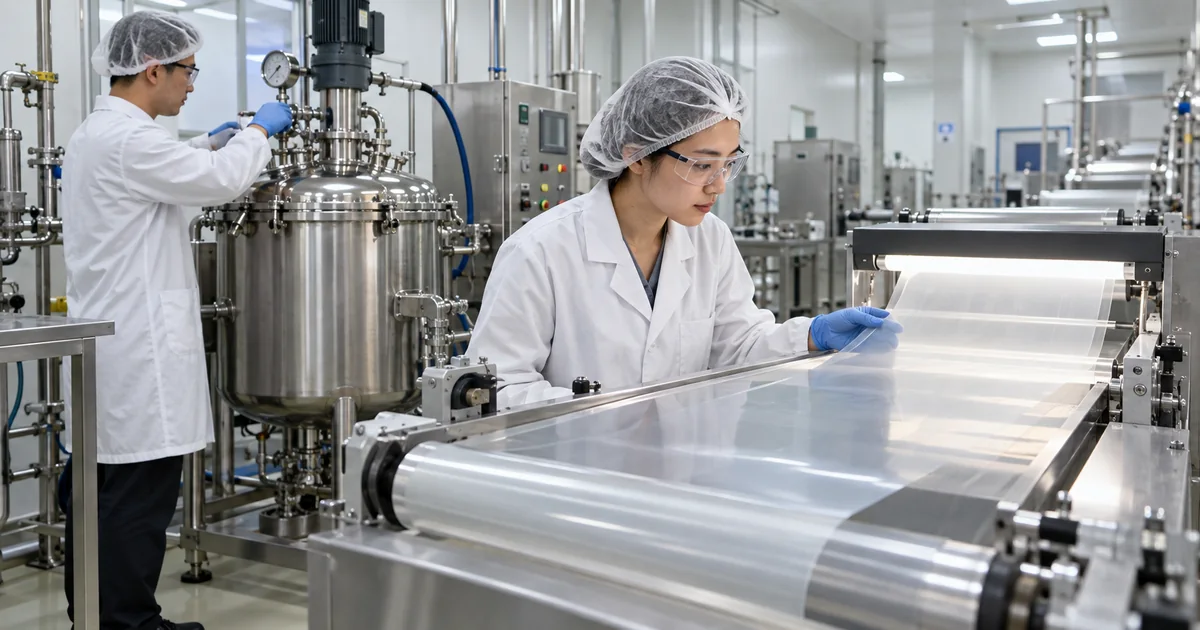
Even a well-degassed solution can develop defects at the coater. Air entrainment may occur at the feed line, pump, filter, slot die or doctor blade. Stabilize flow before collecting acceptable web, remove dead legs and ensure filters do not release trapped air. Wet thickness, line speed, web tension and substrate wetting should remain inside validated ranges. Drying that forms a surface skin too rapidly can trap remaining bubbles, particularly in thicker films. Use staged temperature and airflow where appropriate, and monitor exhaust, residual moisture and film temperature. The objective is not simply to dry faster; it is to remove solvent uniformly without curl, pits, bubbles, brittleness or active migration.
- Prime lines and filters without air pockets
- Stabilize the coating bead before collection
- Trend wet thickness and line speed
- Use justified staged drying conditions
- Inspect residual moisture and mechanical properties
Create a wet-web and dry-film inspection plan
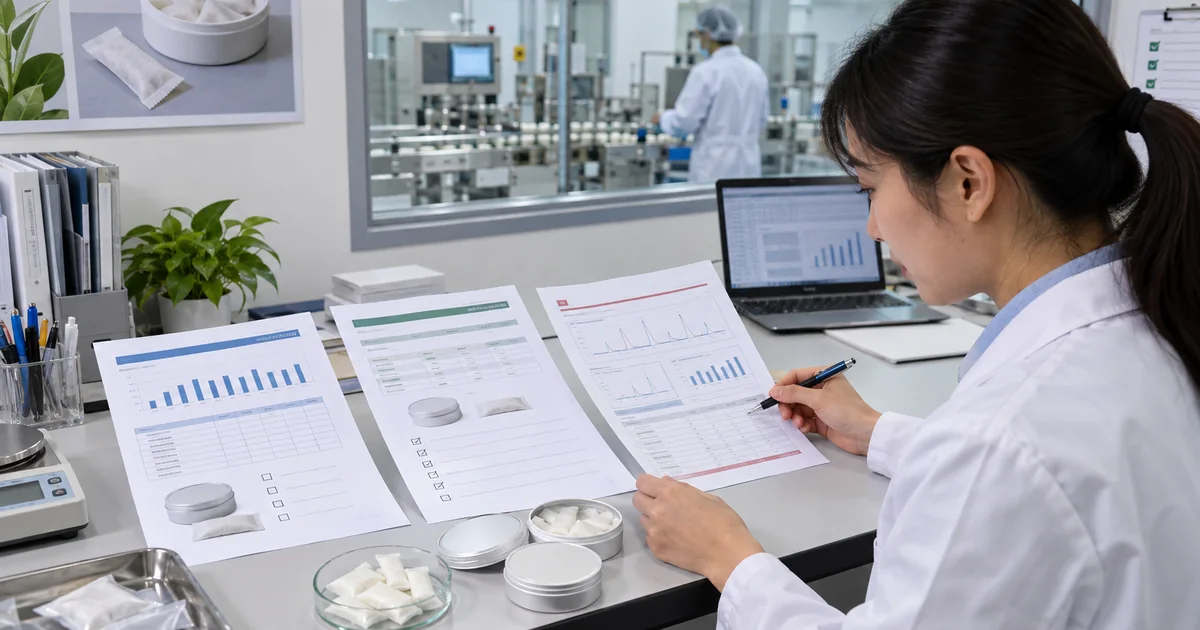
Define defect categories with reference photographs: foam marks, enclosed bubbles, open pits, pinholes, streaks, gels and foreign particles. Inspect the wet web near the coating point and the dried web under controlled transmitted or reflected light. Establish sampling locations across width and along the roll because edge and center behavior can differ. Automated vision can improve consistency, but the detection threshold and reject logic must be challenged with known standards. Link cosmetic defects to critical risks such as missing dose area, weak spots, tearing, sachet seal contamination or poor appearance. Keep roll maps so slitting and cutting can exclude affected zones and support root-cause analysis.
- Defined defect library and size threshold
- Across-web and along-roll sampling
- Wet and dry inspection points
- Roll mapping and segregation rules
- Correlation with assay, strength and disintegration
Related technical guides
- ODF film casting defects
- ODF thickness control
- HPMC versus pullulan ODF
- 2026 nicotine-free oral pouch sourcing guide
Frequently asked questions
Can longer vacuum always remove ODF bubbles?
No. Excessive viscosity, foam-stabilizing ingredients, poor vessel geometry or air introduced after degassing may prevent a longer cycle from solving the defect.
Why do bubbles remain after the surface looks clear?
Microbubbles can remain below the surface, especially in viscous solutions, and may become visible only after coating or drying.
Can antifoam be added to an ODF formula?
Only after assessing regulatory status, taste, film properties, analytical impact and the minimum effective level for the target market.
Are all bubbles only cosmetic defects?
No. They can change local thickness, dose per area, mechanical strength, appearance and cutting or sachet performance.
Sources and scope
- Casting variables and bubbles in orally disintegrating films
- Formulation and process variables in oral films
This B2B article explains sourcing, manufacturing and quality decisions. It is not medical or legal advice. Requirements depend on the formula, claims, dosage form and destination market.
Planning a private-label project? Send Linkbiolabs your target market, formula brief, packaging format and forecast for a project-specific review.
{“@context”:”https://schema.org”,”@type”:”FAQPage”,”mainEntity”:[{“@type”:”Question”,”name”:”Can longer vacuum always remove ODF bubbles?”,”acceptedAnswer”:{“@type”:”Answer”,”text”:”No. Excessive viscosity, foam-stabilizing ingredients, poor vessel geometry or air introduced after degassing may prevent a longer cycle from solving the defect.”}},{“@type”:”Question”,”name”:”Why do bubbles remain after the surface looks clear?”,”acceptedAnswer”:{“@type”:”Answer”,”text”:”Microbubbles can remain below the surface, especially in viscous solutions, and may become visible only after coating or drying.”}},{“@type”:”Question”,”name”:”Can antifoam be added to an ODF formula?”,”acceptedAnswer”:{“@type”:”Answer”,”text”:”Only after assessing regulatory status, taste, film properties, analytical impact and the minimum effective level for the target market.”}},{“@type”:”Question”,”name”:”Are all bubbles only cosmetic defects?”,”acceptedAnswer”:{“@type”:”Answer”,”text”:”No. They can change local thickness, dose per area, mechanical strength, appearance and cutting or sachet performance.”}}]}