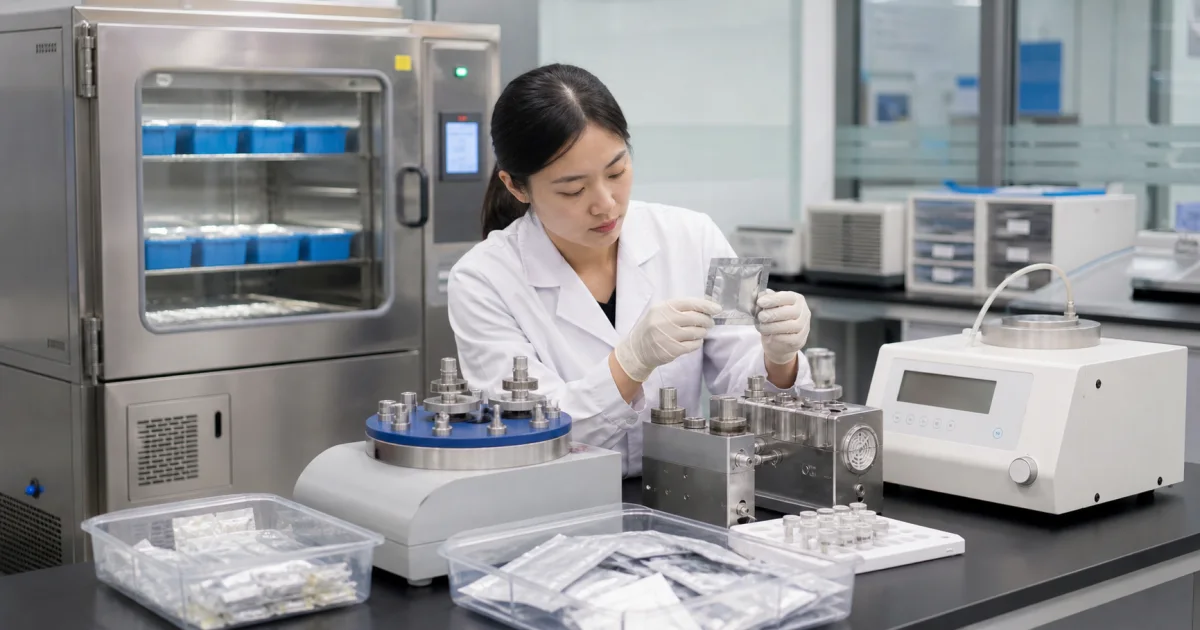
Oral pouch batch traceability is the ability to connect every finished can to its manufacturing batch, raw-material lots, packaging components, test results and distribution records. For a private-label brand, traceability supports complaint investigations, targeted withdrawals, supplier control and consistent product improvement. A batch number printed on a can is useful only when the manufacturer can quickly reconstruct what that number represents.
This guide covers nicotine-free caffeine, guarana and nootropic oral pouches.
What should an oral pouch lot code identify?
A practical lot code should link to a defined manufacturing batch and packaging run. If one blend is packed across multiple days or packaging lines, the coding structure should preserve enough detail to distinguish the affected material. The code should remain legible through normal storage and distribution.
Brands should decide how production date, line, shift or sub-lot information is encoded without exposing unnecessary internal information to consumers. The decoding rule must be controlled and available to authorized quality staff.
Traceability records compared
| Record | What it connects | Why it matters |
|---|---|---|
| Batch manufacturing record | Formula, operators, equipment and process parameters | Reconstructs how the blend was produced |
| Raw-material genealogy | Finished batch to supplier lots | Supports supplier-related investigations |
| Packaging record | Cans, labels, liners and cartons | Isolates component or artwork problems |
| Laboratory results | Samples, methods and release decisions | Shows specification compliance |
| Distribution record | Finished lots to customers or warehouses | Enables targeted market action |
| Retain-sample log | Stored samples to batch and condition | Provides evidence for later comparison |
Build one-step-back and one-step-forward visibility
The manufacturer should be able to identify which supplier lots entered a finished batch and where that finished lot was shipped. This includes low-dose ingredients, flavors, pouch fabric, cans, liners and labels. Rework or returned material requires especially clear control because it can connect multiple batches.
Electronic systems can help, but system complexity is not the goal. Data must be accurate, protected from unauthorized change and retrievable during a time-limited exercise.
Design a useful retain-sample program
Retain samples should represent the released commercial product in its final packaging. The quantity should support likely future tests such as appearance, pouch count, sensory review, moisture, assay or package integrity. Storage conditions and access should be controlled.
A retain sample is not helpful when its label is detached, the can has been opened repeatedly or storage conditions are unknown. The log should record location, quantity, withdrawals and remaining units.
Connect complaints to batch evidence
A complaint form should capture the lot code, purchase location, storage history, photographs and the exact defect observed. The investigation can then compare the complaint unit with retains, batch records, deviations and similar complaints. Trends may reveal a material-lot, machine-lane or transport problem that one isolated report cannot show.
Test recall readiness before it is needed
Mock-recall exercises measure how quickly the team can identify affected raw materials, finished lots and customers. The exercise should reconcile quantities produced, released, rejected, retained and distributed. Gaps need corrective actions rather than being treated as paperwork issues.
Private-label buyer checklist
- Approve the finished-product lot-code format and location.
- Confirm raw-material and packaging-lot genealogy.
- Define retain-sample quantity, storage and retention period.
- Require controlled batch and laboratory records.
- Link complaints to lots, retains and investigation outcomes.
- Review mock-recall timing and quantity reconciliation.
- Define data access when the brand and OEM relationship ends.
Frequently asked questions
Is a production date enough for traceability?
Usually not. Multiple materials, lines or runs may share a date, so a more specific controlled lot identifier is generally needed.
Who owns the retain samples?
The quality agreement should define responsibility, access, storage and disposal between the brand and manufacturer.
Can QR codes replace printed lot numbers?
Digital tools can add information, but the essential lot identifier should remain durable and accessible under the intended distribution conditions.
Related resources: oral pouch factory audit standards, OEM sample checklist, pilot-batch scale-up guide and private-label manufacturing support.