
Breath-freshening oral care pouches need a claim plan before a flavor is approved. “Mint taste,” “freshens breath” and “treats gum disease” ask for different evidence and may lead to different product classifications. A private-label brand should decide what it can actually substantiate, test the finished pouch against that statement, and review the wording in every destination market.
This guide addresses non-medicated oral care pouch concepts. It does not classify every pouch as a cosmetic, food or drug. Intended use, ingredients and the complete advertising presentation matter.
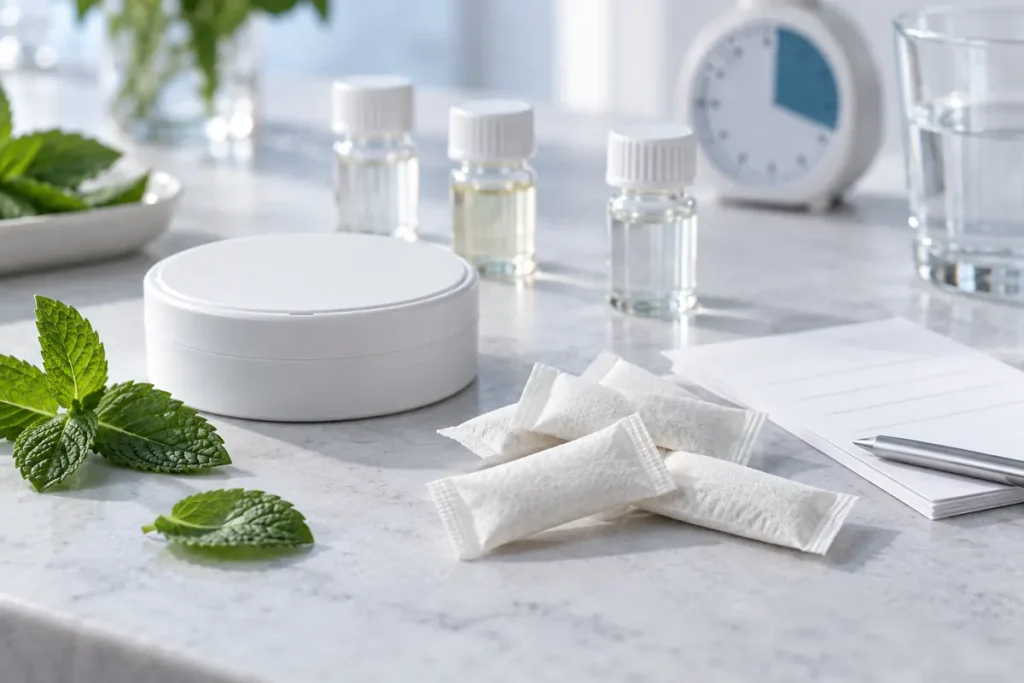
Which claims can a sensory panel support?
A trained or consumer sensory panel can compare perceived freshness, flavor intensity, aftertaste and mouthfeel under a written protocol. The panel should use blinded sample codes, a defined use period, the same rating scale and a prespecified comparison. Report how many people participated and the variation in scores. A preference result can support a narrow statement about that panel’s experience; it does not demonstrate that the pouch reduces oral bacteria or treats a clinical condition.
The US FTC asks marketers to consider both the words on an ad and the impression created by imagery and context. If the page shows a clinician or implies a health outcome, a simple “mint tastes fresh” test may not support what a reasonable buyer takes away. Decide the intended claim before choosing the test. Keep panel instructions, raw ratings, exclusions and formula version with the final summary so later artwork changes can be checked against the evidence.
| Proposed message | Evidence question | Review boundary |
|---|---|---|
| Mint flavor | Is the declared flavor present and acceptable? | Ingredient and sensory review |
| Breath feels fresher | Do users report the stated effect for the stated time? | Defined human sensory protocol |
| Reduces bad breath compounds | Is the measured endpoint relevant to the exact claim? | Product-specific analytical and human evidence |
| Treats gingivitis | Does the market require a drug pathway? | Regulatory review before development proceeds |
Why is “antibacterial” different from “fresh taste”?
“Antibacterial” describes an effect on microorganisms, while “fresh taste” describes a sensory property. The difference changes the evidence needed and may change the legal pathway. FDA information on cosmetic claims explains that disease-treatment or structure/function claims can make a product a drug in the United States. Its oral-healthcare OTC monograph covers certain topical drug products, but the existence of that monograph does not automatically permit the same claim on a novel pouch format.
Have a qualified reviewer assess the proposed ingredient, intended use, instructions and all claim locations, including the website and social posts. Avoid borrowing claims from a mouthwash study for a dry pouch. Contact time, delivery format and measured outcome must be relevant to the product being sold. If the brand only wants a pleasant mint experience, keep the language narrow and do not introduce medical imagery that implies more.
What should the OEM test plan include?
Set the endpoint before making pilot pouches
Start with a locked formula and a clear comparison product. Document flavor identity, pouch material, moisture level, sweetness, use duration and any ingredient that could change oral sensation. Run accelerated and real-time stability checks appropriate to the planned shelf life, then repeat key sensory measures on aged samples. Flavor loss from the can or an irritating first minute can undermine a claim that looked acceptable on a fresh pilot pouch.
For an objective breath claim, agree the endpoint, measurement method, population and timing with the testing partner before recruiting participants. A laboratory count of microbes is not the same as a human breath outcome. If an antimicrobial statement is proposed, regulatory and scientific reviewers should decide whether the test is sufficient for the exact wording. Our oral pouch sensory protocol explains how to separate drip, mouthfeel and flavor duration instead of folding them into one score.
- Write the exact consumer-facing sentence before selecting the test.
- Keep sample codes and evaluation instructions fixed across prototypes.
- Record both individual ratings and summary statistics.
- Repeat relevant checks after packaging and shelf-life exposure.
How should importers review the finished page and can?
Read the package and the landing page together. A cautious can label can be undermined by a web headline that promises treatment, and a photograph can imply a clinical result even when the body copy does not. FTC guidance requires objective health-related claims to have adequate, relevant support before they are published. The importer should also confirm whether ingredient declarations, warnings and product category are suitable for its market.
Use an artwork approval record that identifies the formula, tested sample, claim wording, target country and approving reviewer. Do not let a flavor-name change silently become an efficacy claim. If the evidence supports only a brief sensory impression, specify that scope in the copy. For broader product documentation, see the private-label artwork approval checklist and the oral-care OEM guide.
Sources and scope
- US FTC: Health Products Compliance Guidance.
- US FDA: Cosmetics Labeling Claims and drug-claim boundary.
- US FDA: OTC Monograph M022 for oral healthcare drug products.
Editorial review: 29 October 2026. The claim examples are planning examples, not approved wording for a Linkbiolabs product.
Frequently asked questions
Can a mint-flavor panel substantiate an antibacterial claim?
No. A sensory panel can measure perceived flavor and freshness under its protocol. An antibacterial claim needs different product-relevant evidence and a regulatory review.
Does a mouthwash study support the same claim for an oral pouch?
Not automatically. The format, use time, ingredients, delivery and measured outcome must be relevant to the finished pouch and exact proposed wording.
What should a breath-freshening pouch panel record?
Record the prespecified claim, participant count, blinded samples, use period, rating scale, comparator, individual ratings and variation in results.
Can a website headline create a claim absent from the can?
Yes. Advertising claims include the overall impression from headlines, images and context. Review the package and website together before launch.