A pouch can have an early flavor peak and still receive a poor overall preference score. A time-intensity panel separates the timing of a sensation from whether participants like it. That distinction helps an OEM team change the formula without treating a stronger sensation as proof of better performance.
Editorial scope: technical development and supplier review. Published 16 November 2026. The study and control suggestions below are not reported results from this supplier.
Choose one sensation per measurement
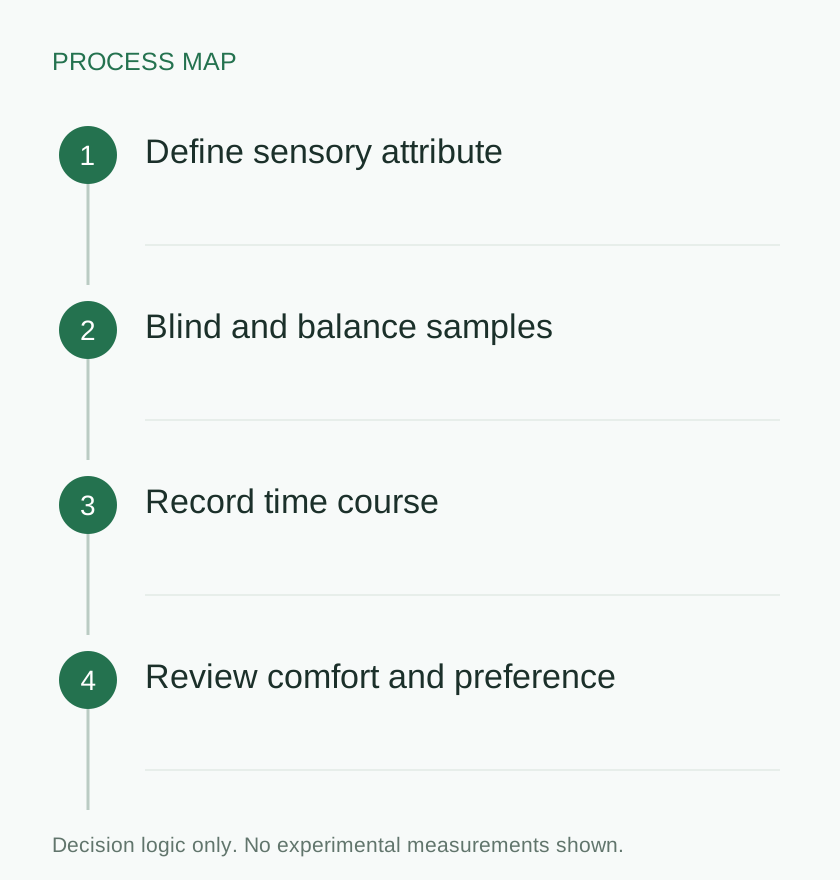
Define attributes before the session: mint intensity, bitterness, sweetness, cooling or irritation are different observations. Give assessors anchored descriptions and a common timing method. Avoid an omnibus score such as strength, which can blend flavor, caffeine expectations and discomfort. Restrict any human-use work to an appropriately reviewed protocol for the intended finished product.
Control sequence and carryover
Code samples so participants and, where practical, assessors do not know the formulation. Balance order across participants and specify washout and session stopping rules. Cooling agents and persistent flavors may carry into a second sample. Collect an acceptability score separately from the intensity timeline. Do not combine caffeine or nicotine exposure simply to fit more samples into a session.
Describe what the panel can support
Report the participant population, exclusions, number of evaluable sessions and missing observations. A time-to-peak result measures the assessed sensation under that protocol; it does not measure absorption speed or treatment benefit. Compare the whole trajectory and variability rather than choosing a favorable single time point. Consumer preference and a trained descriptive panel also have different purposes.
Development review checklist
- Predefine attributes and an intensity scale.
- Use blinded sample codes and balanced order.
- Separate oral comfort from desirable flavor intensity.
- Specify exposure limits, washout and stop rules with qualified oversight.
- Keep preference results distinct from analytical release data.
Buyer questions
Does a stronger cooling sensation mean faster caffeine uptake?
No. Cooling is a sensory response and cannot establish pharmacokinetics.
Should the panel rank samples or score each one?
Choose according to the question. A ranking alone cannot explain the size or timing of an attribute difference.
Why can a second sample taste weaker?
Carryover, adaptation and order effects can change perception. Balance the sequence and define washout.
Can one employee approve a flavor for the market?
An internal impression is an early screen. It does not represent a blinded panel or the target population.
Should an irritation report be included in the taste score?
Record it separately and follow the protocol stopping procedure. A high preference average must not hide discomfort.
References and scope
- FDA: Spilling the Beans, How Much Caffeine Is Too Much?
Total caffeine from all sources; 400 mg/day statement limited to most adults, not a target or universal safe limit.
- FDA: Small Entity Compliance Guide, Dietary Supplement CGMP
Specifications and production records where dietary-supplement classification applies; not automatic classification of every oral pouch.
Discuss the specification and evidence needed for your project. Send the intended use, destination market and the attribute you need to verify. Commercial capability and acceptance criteria require a project-specific agreement.