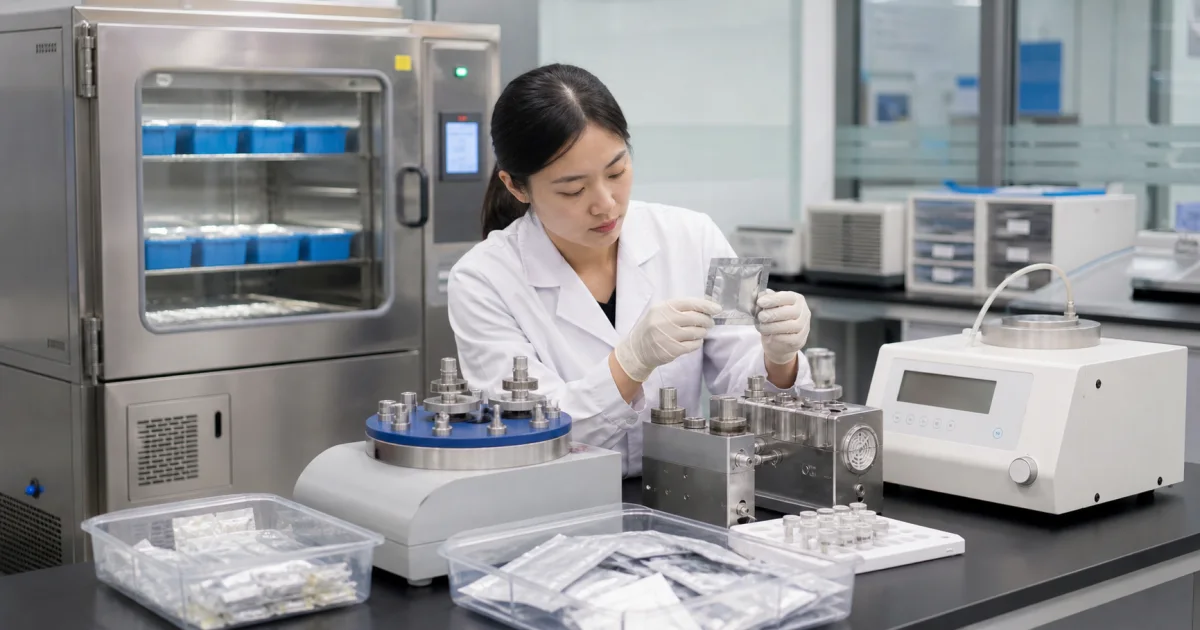
Guarana pouch color and flavor standardization requires more than buying an extract with a stated caffeine percentage. Botanical origin, extraction, carrier system, particle size, moisture and storage can change powder color, aroma and taste from batch to batch. An OEM program should define acceptable raw-material variation and show how the finished nicotine-free pouch remains consistent.
Why standardized guarana can still vary
A standardized assay controls a selected marker, such as caffeine, within a defined range. It does not make every sensory or physical attribute identical. Growing conditions, seed processing and extraction parameters influence polyphenols, roasted notes, color and bitterness. Drying conditions and carriers can further change appearance and flow.
Two lots may therefore meet caffeine assay while producing noticeably different pouch color or flavor. The solution is not automatically to reject all visual variation; it is to set product-relevant limits and evaluate the finished formula.
Incoming guarana extract controls
| Attribute | Why it matters | Typical review |
|---|---|---|
| Identity and caffeine assay | Confirms material and standardized strength | Qualified analytical method and COA verification |
| Color | Affects finished pouch appearance | Controlled lighting, reference range or instrument |
| Aroma and taste | Influences flavor-masking demand | Trained sensory comparison |
| Particle size | Changes flow, blending and release | Sieve or laser-based distribution |
| Moisture and water activity | Influence clumping and stability | Defined methods and limits |
| Microbiology and contaminants | Supports raw-material safety and compliance | Risk-based specification for target markets |
Use a qualified reference lot
A retained reference lot gives purchasing, quality and sensory teams a practical comparison point. Reference samples must be stored in conditions that limit oxidation, moisture change and aroma loss. An old or poorly stored reference can create false conclusions about a new lot.
Color assessment should use consistent lighting, sample depth and container type. Photographs taken on different phones are not a reliable specification. Instrumental color measurement can improve objectivity when appearance is commercially important.
Standardize finished-pouch flavor
Guarana contributes bitterness and characteristic botanical or roasted notes. Flavor systems may use coffee, cocoa, mint, berry or citrus directions, but the masking strategy should be tested against several approved raw-material lots. A formula optimized around only one lot may drift when normal botanical variation appears.
Sweetener, acid, flavor and cooling levels should be set within a controlled formula. Adjusting every production batch by taste without a documented procedure can create even greater inconsistency. If sensory adjustment is allowed, the decision tree, limits and approvals should be defined.
Control caffeine contribution
The finished caffeine target must account for the actual standardized assay and the amount of guarana extract added. If other caffeine sources are present, their contribution must also be included. Low-dose blending, finished-pouch assay and content-uniformity testing confirm that the labeled amount is achieved consistently.
Natural-source positioning does not remove the need for dose transparency or destination-market review. Label wording should accurately describe the ingredient and avoid implying that botanical caffeine is inherently risk-free.
Stability and packaging considerations
Guarana aroma and color can change with oxygen, light, heat and moisture. The pouch formula and can closure should be evaluated together. Stability samples should track caffeine assay, moisture, microbiology, color, aroma, flavor and pouch performance over time.
Private-label buyer checklist
- Specify botanical identity, extract ratio and standardized caffeine range.
- Approve supplier, carrier materials and change-notification terms.
- Set color and sensory acceptance ranges using qualified references.
- Test multiple raw-material lots during formulation development.
- Recalculate caffeine contribution from the actual assay.
- Verify finished-pouch assay and unit uniformity.
- Review aged product for color, aroma and flavor drift.
Frequently asked questions
Does darker guarana extract contain more caffeine?
Color alone does not establish caffeine content. A qualified analytical assay is required.
Can every botanical lot taste exactly the same?
Natural variation is expected, but supplier qualification, specifications and finished-product controls can keep differences within an acceptable range.
Is a supplier COA enough?
The COA is important, but buyers should use risk-based identity and verification testing and evaluate how the material performs in the finished product.
Read our 20% standardized guarana verification guide, synthetic caffeine vs guarana comparison and private-label guarana sourcing guide.