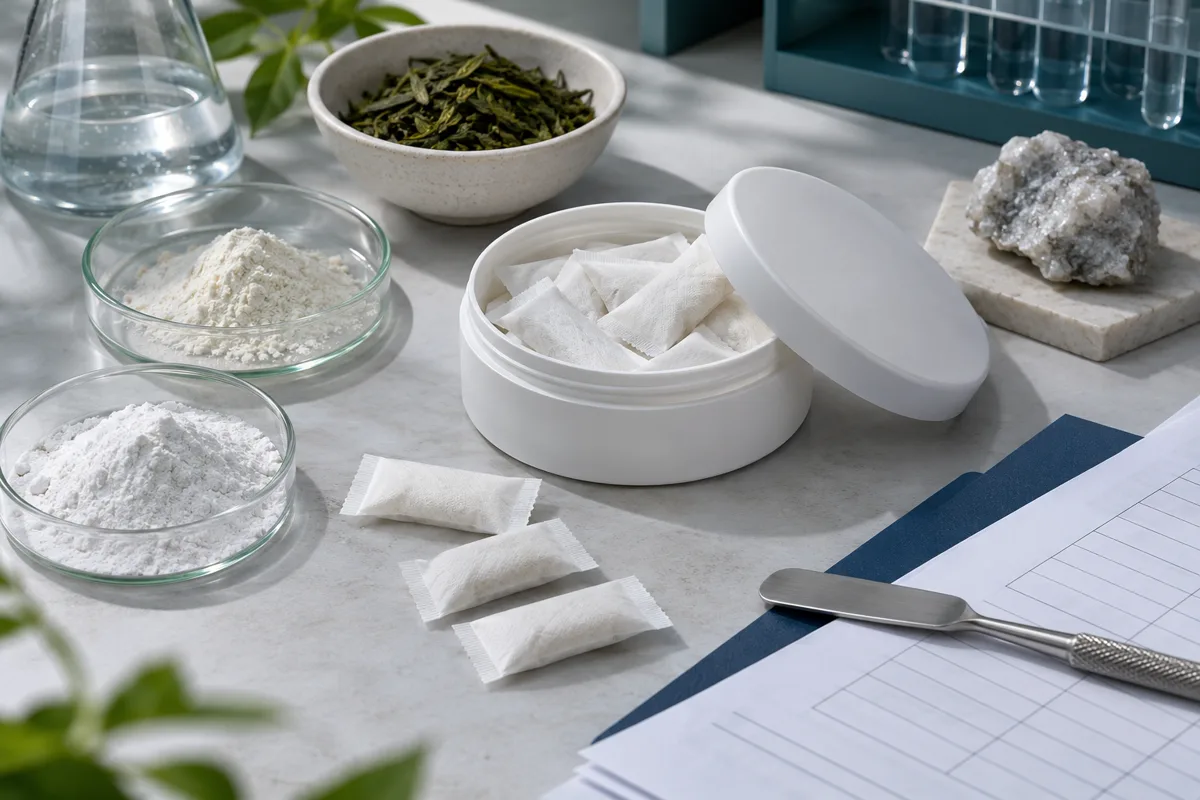

Vitamin B12 oral pouches should be specified by the form of B12, declared amount per pouch, finished-unit assay and stability in the chosen can or sachet. A supplier can offer cyanocobalamin or methylcobalamin, but the ingredient name alone does not settle dose uniformity or shelf life. The US National Institutes of Health reports no evidence that supplemental B12 absorption differs by form, and it does not find sublingual products more effective than oral supplements.
Brands exploring vitamin pouches should therefore treat “better absorption” as a claim requiring product-specific evidence. The procurement questions here do not address treatment of B12 deficiency.
Which B12 form should an OEM brief specify?
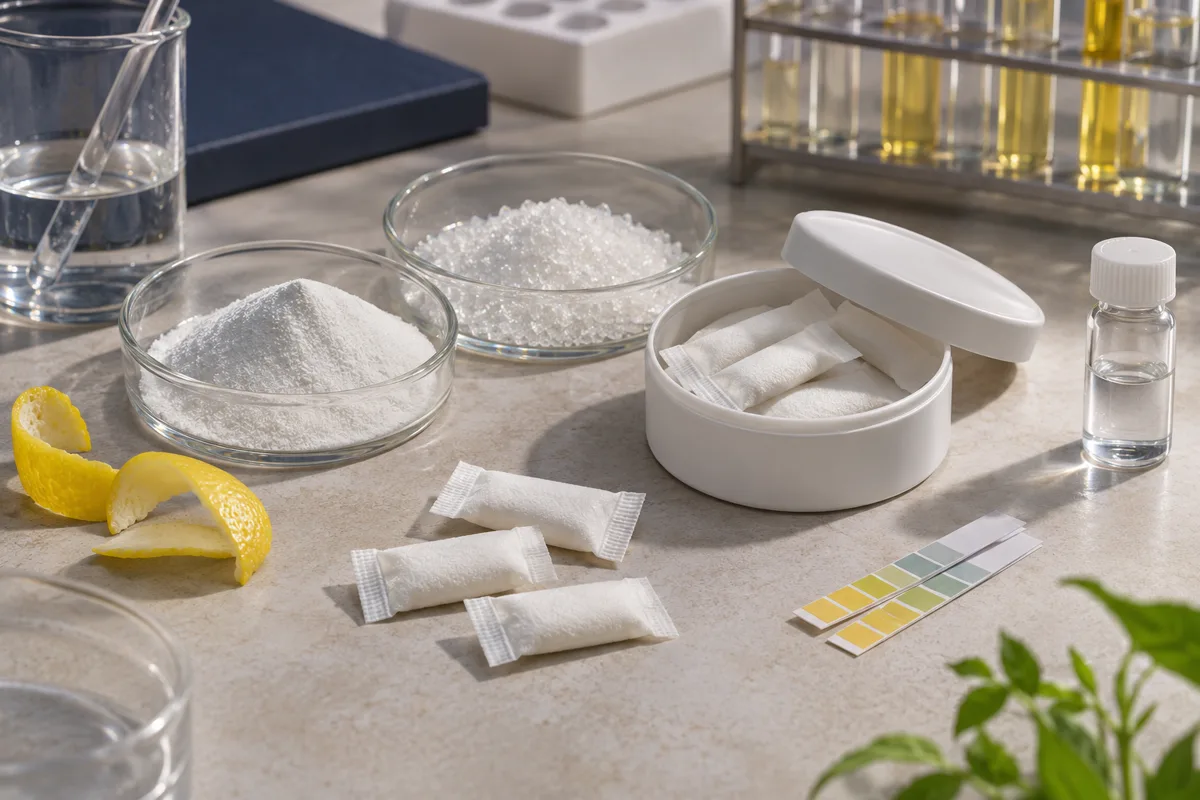
Name the exact form rather than writing only “vitamin B12.” Cyanocobalamin and methylcobalamin are both used in supplements, but their stability behavior and assay requirements can differ with light, pH, temperature and other ingredients. Choose a form after the manufacturer has shown a workable premix, a test method for the proposed pouch matrix, and data from the intended package.
| Decision | Cyanocobalamin | Methylcobalamin |
|---|---|---|
| Ingredient description | Name this form in the formula and test request | Name this form in the formula and test request |
| Absorption claim | NIH reports no proven form advantage | NIH reports no proven form advantage |
| Stability work | Check light and matrix effects in the final pack | Check light and matrix effects in the final pack |
| Release evidence | Validated assay at the declared unit level | Validated assay at the declared unit level |
The FDA Daily Value for B12 is 2.4 micrograms for adults and children aged four and older. That is a labeling reference, not a recommended amount for this pouch format or a substitute for market-specific review.
How do you keep a microgram-level ingredient evenly distributed?
Use a documented premix and validate the blend-to-pouch transfer before setting a label claim. A microgram quantity spread through a much heavier pouch fill is vulnerable to weighing error, incomplete mixing and segregation. Sampling only the bulk blend can miss variation in individual finished units, particularly after a hopper has run for some time.
Make the sampling plan follow the process
Agree which pouches represent the beginning, middle and end of a pilot run, and record the number of units combined or assayed individually. Ask the lab to report the B12 form measured, recovery, working range and units per pouch. The method must work in the finished matrix with its sweeteners and flavors. A raw-vitamin assay certificate cannot establish finished-unit content. The blend-to-pouch dose-control guide covers the wider uniformity problem.
What should a B12 pouch stability study measure?
Measure retained B12 content in the actual proposed can or sachet while also checking moisture, pouch appearance and seal condition. Published work on B12 forms describes sensitivity to light, pH, heat and interactions with other water-soluble ingredients. Those findings justify a risk-based stability plan, but they do not predict the shelf life of this exact formula.
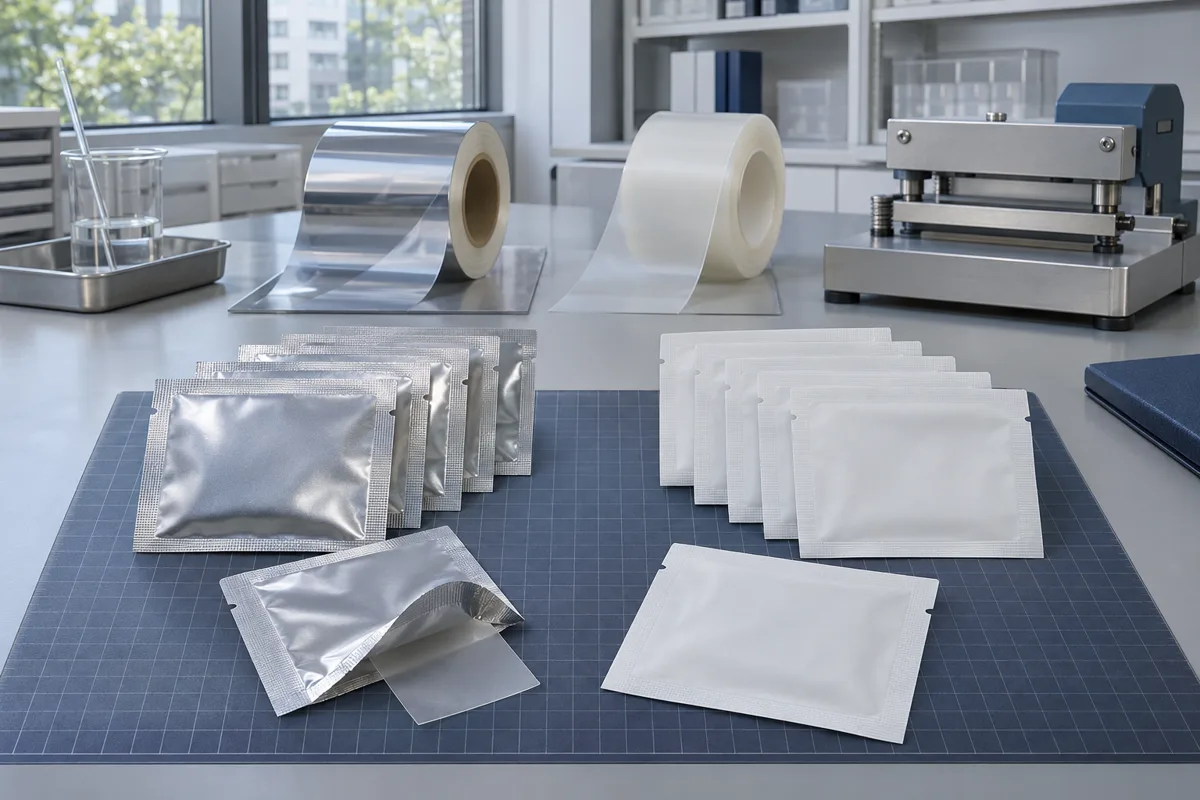
Include an unopened package control and realistic storage conditions for the target market. If the pack is translucent or regularly opened, assess those exposures as separate scenarios. Specify test points and acceptance criteria before receiving data; do not choose a shelf-life number from an accelerated study alone. For related packaging questions, see the oral pouch shelf-life guide and the can comparison.
What should the brand approve before artwork release?
Approve the exact B12 form, declared unit amount and analytical method alongside the wording on the can. The ingredient specification, pilot batch record, finished-pouch result and label must describe the same formula. If any one changes, reopen the artwork and release review instead of relying on the previous approval.
- Confirm whether the destination market treats the finished product as a food, supplement or another regulated category.
- Ask for the B12 form, assay method and unit of measure on each lot document.
- Review any “energy,” “focus” or deficiency-related wording separately from the composition claim.
- Keep a retained sample from the approved pilot batch and the final pack specification.
US dietary supplement manufacturing guidance requires established specifications for identity, purity, strength and composition when that regulatory category applies. Other markets may classify the product differently; importer review is necessary before export.
Sources and scope
- NIH Office of Dietary Supplements: Vitamin B12 health professional fact sheet.
- Vitamin B12 in foods, food supplements and medicines: review of stability factors.
- FDA: dietary supplement CGMP and specifications.
Editorial review: 24 October 2026. The published stability findings concern B12 generally; no finished Linkbiolabs B12 pouch data or comparative absorption trial is claimed here.
Frequently asked questions
Is methylcobalamin proven to absorb better from an oral pouch?
No product-specific evidence is presented here. NIH reports no established absorption advantage among supplemental B12 forms and no efficacy advantage for sublingual over oral supplements.
Can a raw B12 COA verify the amount in every pouch?
No. The raw-material COA describes the incoming ingredient lot. Finished-unit assay and a representative sampling plan address mixing, filling and storage effects.
Is 2.4 micrograms the required B12 amount per pouch?
No. In the United States, 2.4 micrograms is the Daily Value used for labeling adults and children aged four and older. It is not a mandatory pouch dose.
Does an opaque can eliminate the need for stability testing?
No. The finished formula and its package still need stability evidence for the intended storage conditions and shelf-life claim.