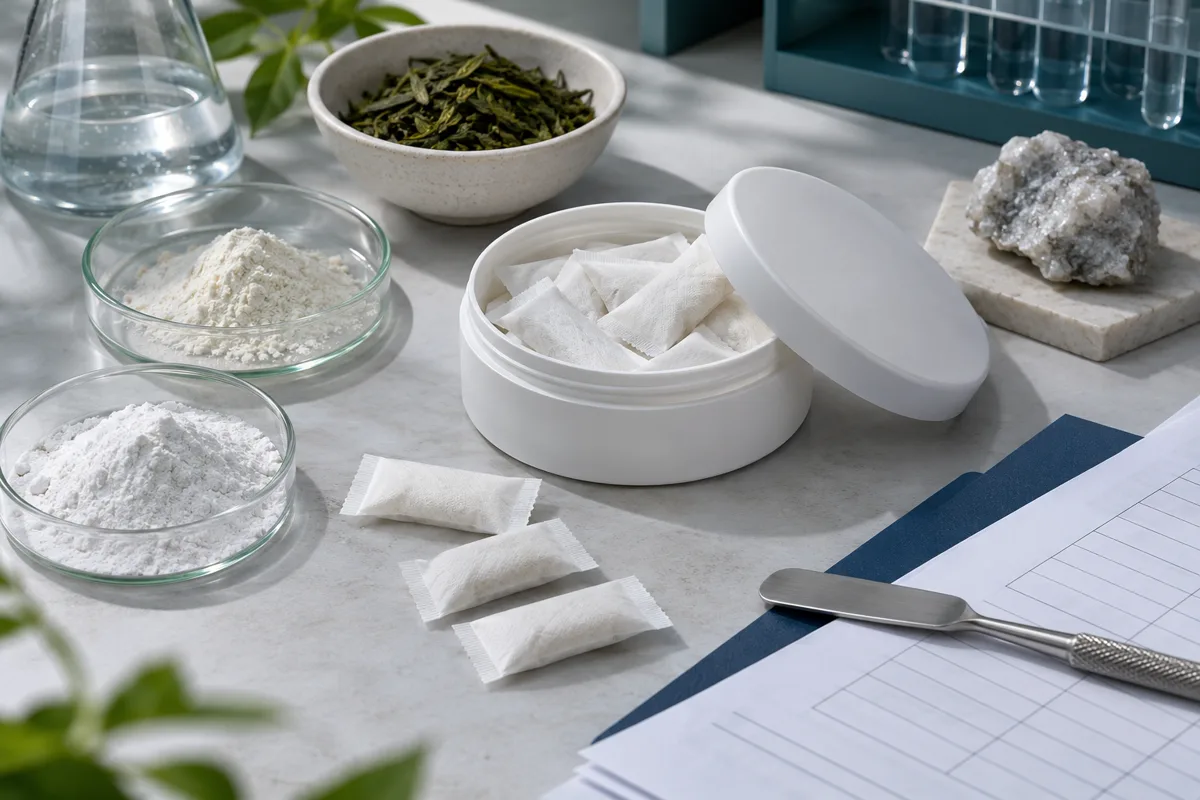
Coffee pouches with caffeine can mean three different products: a coffee-flavored pouch without a coffee ingredient, a pouch containing coffee material that naturally contributes caffeine, or a pouch with separately added caffeine. The name on the front of the can does not tell a buyer which one it is. Specify both flavor source and total caffeine per finished pouch, then check the formula, assay and label against the same intended market.
For a brand extending its coffee pouch range, this distinction affects ingredient sourcing, batch testing and the wording customers see. It also prevents a coffee-flavored, caffeine-free concept from being sold as an energy pouch by accident.
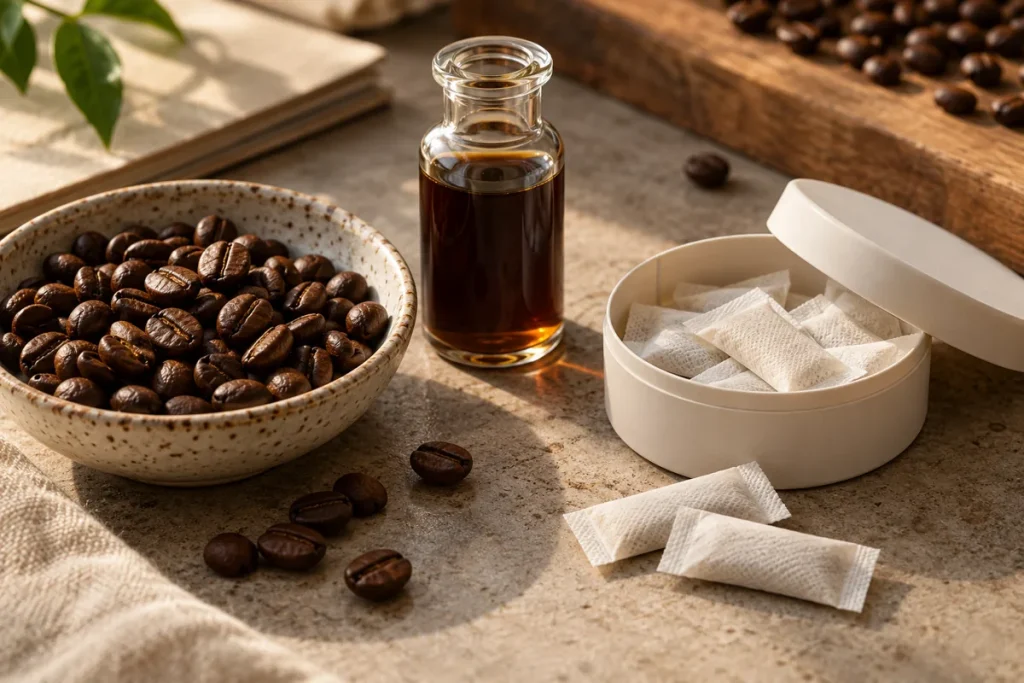
How can coffee flavor and caffeine source differ?
Ask for the complete formula before setting a caffeine claim. Coffee aroma may come from a flavoring, while caffeine may come from coffee extract, a separate caffeine ingredient, or both. A “natural coffee” description cannot replace a quantitative assay, because the contribution of each caffeine-bearing input has to be calculated and then checked in finished units.
| Proposed SKU | What supplies coffee character? | What to verify |
|---|---|---|
| Coffee flavor only | Flavor system | Whether any ingredient brings measurable caffeine |
| Coffee ingredient pouch | Coffee powder or extract | Ingredient specification and finished-unit caffeine |
| Coffee plus added caffeine | Coffee material or flavor and separate caffeine | Total caffeine from all sources and ingredient declaration |
The US FDA explains that naturally occurring and added caffeine both count toward a person’s total intake. It also notes that decaffeinated coffee is not necessarily caffeine-free. Those statements concern caffeine exposure generally; they do not certify a particular oral pouch formula.
Which laboratory method answers the finished-pouch question?
Request a caffeine result reported in milligrams per finished pouch, with a method shown to work in the actual pouch matrix. ISO 20481:2008 is a reference HPLC method for coffee and coffee products, including regular and decaffeinated coffee. Its listed scope does not automatically include a nonwoven pouch containing sweeteners, fillers and flavors.
Separate ingredient testing from unit testing
Use the coffee material certificate to understand the incoming lot, then ask the laboratory to validate or verify extraction, recovery and precision for the complete finished pouch. Sample across the fill run to check whether caffeine is distributed consistently. The 2025 Eurachem method-validation guide addresses fitness for purpose when a method is extended to a different use. Our third-party HPLC checklist describes the questions to put on a lab request.
What does a coffee-pouch label need to explain?
Show the actual caffeine-bearing ingredients and a defensible amount per serving where the destination market requires or permits that declaration. The US FDA says added stand-alone caffeine must appear in the ingredient list of packaged food, while an ingredient naturally containing caffeine is listed by its ingredient name. That rule depends on US product classification; it should not be copied onto every export label without review.
The FDA cites 400 mg per day as an amount not generally associated with adverse effects for most adults. This is a broad intake reference, not a legal per-pouch limit or a safe target for every person. Artwork should avoid turning it into a suggested serving instruction. Review warnings, target users and all caffeine sources with the importer before approving print files.
What should the OEM sample request contain?
Request separate prototypes for coffee flavor, coffee ingredient and added-caffeine routes if all three are commercially relevant. Blind sensory testing can then assess coffee character without hiding differences in bitterness, pouch wetting or aftertaste. Keep each prototype’s formula version, ingredient COAs and measured caffeine result together so the chosen sample can be reproduced.
- State the intended caffeine amount per finished pouch and the number of pouches per can.
- Identify every coffee-derived ingredient, flavor and separately added caffeine source.
- Agree a finished-unit assay, sampling points and acceptance criteria before the pilot run.
- Check package moisture protection, flavor retention and relevant lot-code records.
- Send the destination-market label to a qualified importer or regulatory reviewer.
Brands comparing the format with drinks can use the caffeine pouches versus coffee guide; the comparison does not establish faster absorption or a stronger effect.
Sources and scope
- US FDA: caffeine sources, labeling and adult intake context.
- ISO 20481:2008: caffeine determination in coffee and coffee products by HPLC.
- Eurachem: 2025 Fitness for Purpose analytical method validation guide.
Editorial review: 24 October 2026. No caffeine amount, test result or market authorization is asserted for a Linkbiolabs coffee-pouch SKU.
Frequently asked questions
Do all coffee-flavored pouches contain caffeine?
No. A coffee flavor system can be different from a coffee ingredient or added caffeine. Read the full formula and test the finished pouch before making a caffeine claim.
Can ISO 20481 be used directly for an oral pouch?
Its published scope covers coffee and coffee products. A laboratory must demonstrate that its method is fit for the finished pouch matrix before using the result for a pouch claim.
Does naturally sourced caffeine count toward total caffeine?
Yes. The caffeine from coffee material and any separately added caffeine both contribute to the total measured amount in the finished pouch.
Is the FDA 400 mg figure a per-pouch limit?
No. The FDA describes it as a daily intake level not generally associated with adverse effects for most adults, not a legal per-pouch limit or universal recommendation.