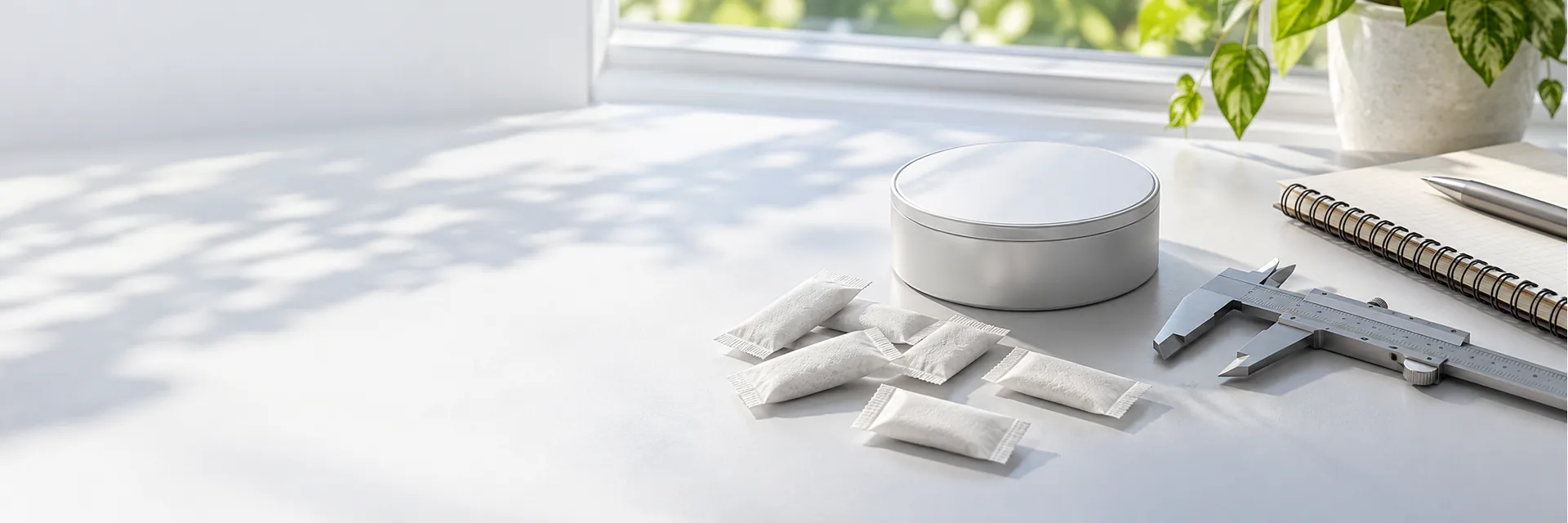
Caffeine pouch release testing in artificial saliva can help a brand compare prototypes under the same laboratory conditions. It does not measure human absorption, onset of alertness or a consumer’s actual caffeine intake. A useful OEM brief defines the test medium, time points, agitation, pouch handling and analytical method before the first prototype is compared with another.
For private-label caffeine pouches, keep the finished-pouch caffeine assay separate from the release profile. The assay answers how much caffeine is present. The release test asks how much enters the chosen medium over the chosen time.
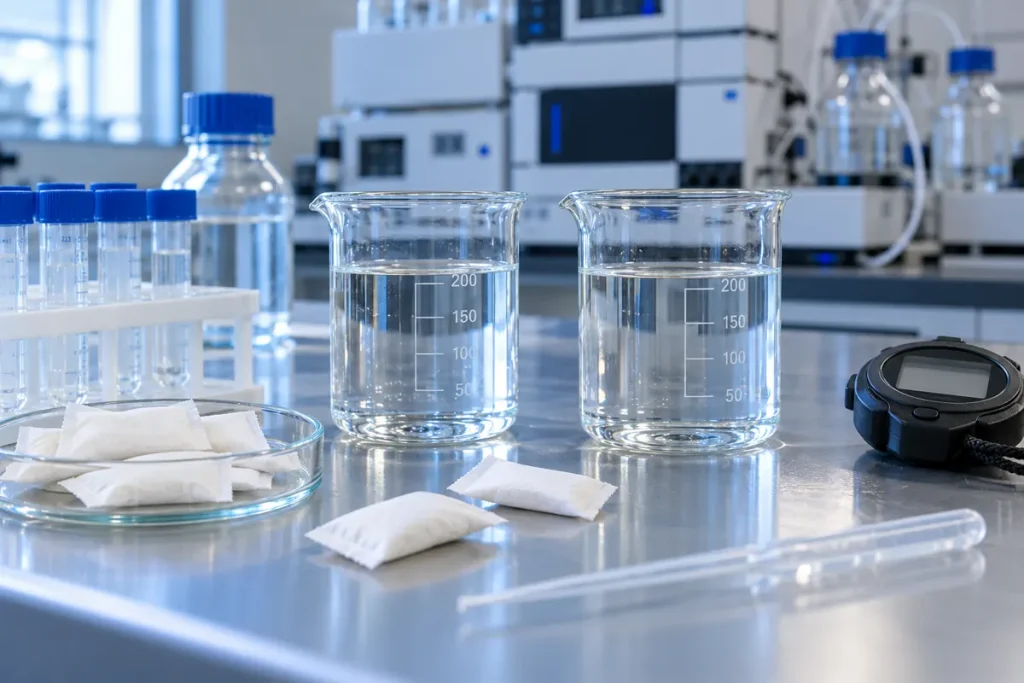
What should an in-vitro release method specify?
Specify enough detail for a second laboratory to repeat the experiment. At minimum, record the artificial-saliva composition and pH, liquid volume, temperature, agitation, number of pouches, sampling times, replacement volume and whether the pouch is compressed or left untouched. A percentage-release curve is meaningful only when the total caffeine in the tested units is measured or otherwise defensibly established.
There is no single official artificial-saliva release test that automatically certifies every caffeine pouch. Treat the protocol as a product-development comparison and qualify it for the specific pouch matrix. The 2025 Eurachem guide describes how to judge an analytical method’s fitness for purpose, including sampling and handling. Ask the laboratory to document recovery, repeatability and the effect of flavors or sweeteners on the caffeine measurement. Keep the raw time-point results and formula version alongside the curve.
| Question | Finished-pouch assay | In-vitro release profile |
|---|---|---|
| Primary answer | How much caffeine is in one unit? | How much enters a defined medium over time? |
| Typical output | mg per pouch and variation across units | mg or percentage at agreed time points |
| Cannot establish alone | Release behavior in use | Human absorption, onset or clinical effect |
How should prototypes be compared fairly?
Hold the method steady while changing the formulation
Keep the method fixed while changing one formulation variable at a time. If the brand is comparing dry and moist fills, or two nonwoven fabrics, use the same test medium, time points and calculation rule for both. Report the full result spread rather than only the mean. A curve that looks faster may reflect a different starting caffeine amount, pouch fill weight or sample preparation rather than a better design.
Pair laboratory release data with a separate sensory panel for drip, mouthfeel, bitterness and flavor duration. These observations answer a user-experience question; they are not a substitute for analytical data. Our low-drip caffeine pouch guide covers saliva uptake and material choices, while the third-party HPLC checklist helps buyers evaluate the laboratory report. Keep the prototype codes blinded during sensory review so preferred flavor does not bias judgments about comfort.
Which caffeine numbers belong on the label review sheet?
Start with measured caffeine per finished pouch and the proposed serving definition. Include caffeine from every ingredient, including guarana or coffee material if they are present. FDA consumer guidance says naturally occurring and added caffeine both contribute to total intake. EFSA’s scientific opinion discusses single-dose and daily intake levels for healthy adults, but those figures are exposure references, not legal limits for oral pouches or proof that a proposed serving is safe for every user.
A release curve should not be translated into “fast acting,” “absorbs in five minutes” or similar consumer claims without human evidence for the finished product. Ask the importer or regulatory reviewer to check ingredient status, intended use, warnings and category-specific label rules in the target market. Avoid applying one country’s framework to a global carton. The pouches versus coffee comparison is a format guide, not a pharmacokinetic claim.
What should be in the final test report?
The report should let a buyer trace a chart back to actual units. Request the laboratory’s method revision, sample receipt condition, lot and prototype identifiers, caffeine assay, individual time-point results, blank and recovery results, calculation method and deviations. An ISO/IEC 17025 accreditation statement is useful only when the relevant test or method sits within the lab’s applicable scope. Keep the result with the pilot-batch record.
Before commercial transfer, repeat the comparison after any change to caffeine source, fabric, filler, moisture or seal. A new formula can preserve total caffeine while changing release behavior. If results differ, investigate the material and process change before copying a previous marketing sentence. A clear development brief is more useful than a single attractive graph when the manufacturer has to reproduce the chosen pouch at scale.
- Report caffeine as mg per finished pouch and at each release time point.
- Record the medium, pH, temperature, volume and agitation.
- Include replicate results and analytical recovery.
- State that the result is in vitro and does not predict human onset by itself.
Sources and scope
- Eurachem: 2025 Fitness for Purpose of Analytical Methods guide.
- ISO/IEC 17025:2017: testing laboratory competence.
- US FDA: caffeine from all dietary sources.
- EFSA: Scientific Opinion on the Safety of Caffeine.
Editorial review: 29 October 2026. No release curve or clinical onset is asserted for a Linkbiolabs caffeine pouch SKU.
Frequently asked questions
Does artificial-saliva testing measure how quickly a person feels caffeine?
No. It measures caffeine entering a defined laboratory medium under specified conditions. Human absorption and perceived onset require separate human evidence.
Is a caffeine assay the same as a release profile?
No. An assay measures total caffeine in a finished pouch. A release profile measures the amount entering the chosen medium at stated time points.
What must stay fixed when two pouch prototypes are compared?
Keep the medium, pH, volume, temperature, agitation, sampling times, calculation method and handling protocol fixed, and record each prototype’s starting caffeine content.
Can EFSA adult intake figures be used as a per-pouch legal limit?
No. EFSA figures are scientific exposure references, not a universal legal limit for caffeine oral pouches or proof that a proposed serving is safe for everyone.