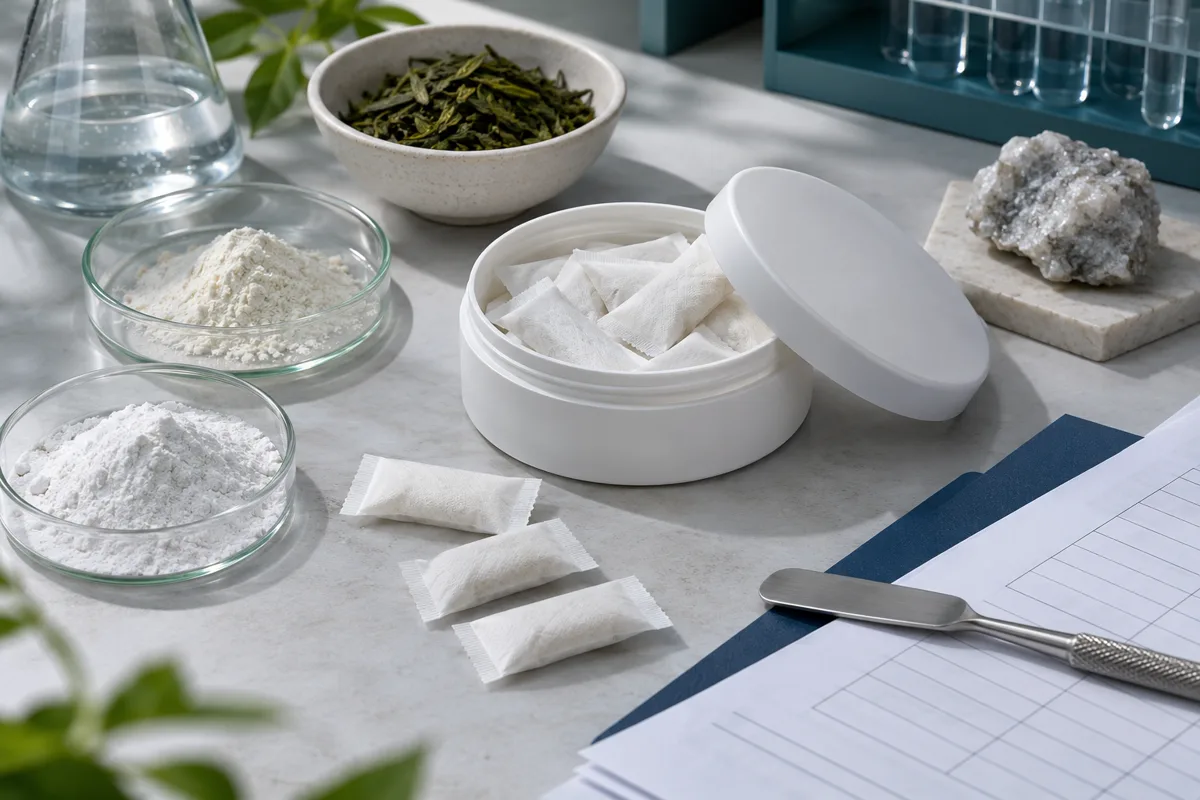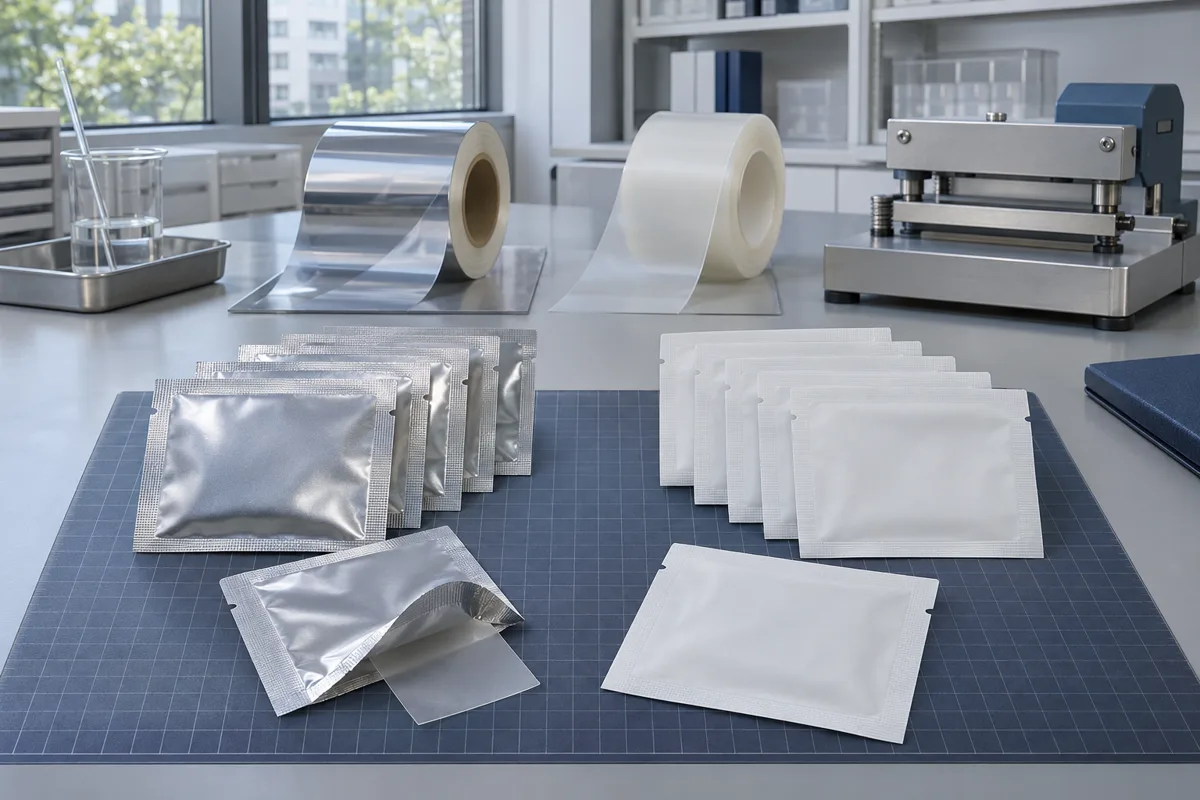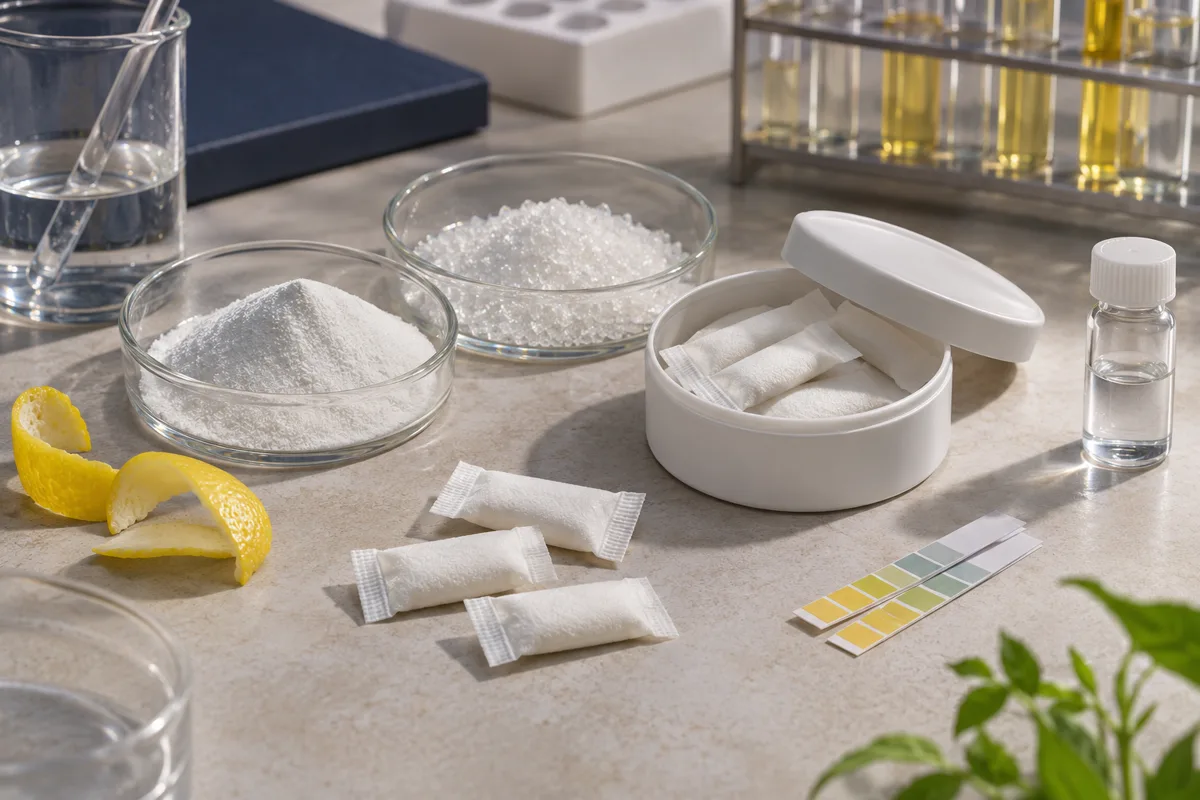

Melatonin pouches versus melatonin ODF is a manufacturing and market-entry decision, not a choice that can be made from package size alone. A pouch contains a filled nonwoven unit and is typically packed in a can; an orodispersible film is a thin, cut unit usually protected in a single-dose sachet. Both need a defensible melatonin amount per finished unit, stability evidence and a destination-market classification review before sale.
Brands considering melatonin pouches and Melatonin ODF should compare the actual prototype and proposed instructions. Neither format proves a faster effect or a better sleep outcome by its shape.
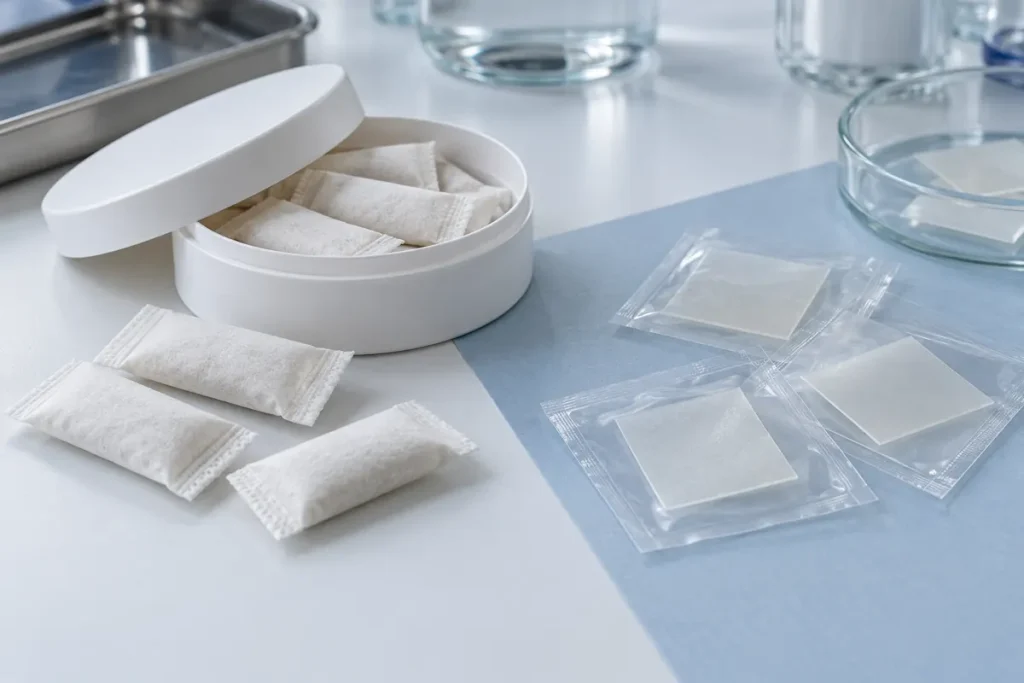
How do unit-dose controls differ?
For a pouch, control blend uniformity, fill weight, material losses and the amount measured in finished units across the run. For a film, control solution homogeneity, coating thickness, drying, cut area and finished-unit assay. The same target amount can be missed through different process failures. A pilot report should therefore show individual unit results and sampling locations, not a single composite result that hides variation.
Use a method demonstrated to work in each finished matrix. Nonwoven fabric, film polymer, flavors and colors can interfere with extraction or analysis. The ODF content uniformity guide discusses film sampling; the pouch blend-segregation guide addresses a different source of variation. If a brand switches formats, ask for a fresh method and acceptance plan rather than assuming that a pouch assay transfers unchanged to film.
| Buyer decision | Melatonin pouch | Melatonin ODF |
|---|---|---|
| Unit construction | Filled, sealed nonwoven pouch | Cast, dried and cut film |
| Primary variability to investigate | Blend and fill distribution | Coating and cut-area uniformity |
| Typical pack concept | Multi-unit can with closure | Individual moisture-protective sachet |
| Shared requirement | Finished-unit assay and stability | Finished-unit assay and stability |
Which package should the stability study test?
Test the commercial package under the proposed storage conditions. A pouch can needs a closure and material that preserve the chosen moisture and flavor profile through distribution. A film needs a sachet whose barrier and seal keep the sheet from curling, sticking or losing its intended properties. The ODF sachet barrier guide explains WVTR and OTR questions; the oral pouch shelf-life guide covers water activity and can performance.
Set the stability protocol against actual target markets and transport conditions. Record assay, physical appearance, odor, package integrity and any performance test relevant to the format. Do not infer that a sachet with an impressive barrier number will protect every film: seal quality and the full pack structure still matter. Likewise, a can that works for a dry energy pouch may not be suitable for a different melatonin formulation.
What US classification issue should a buyer flag early?
Have US counsel review whether the formula, directions and intended use fit the proposed regulatory category. FDA has stated that melatonin is not an approved food additive for conventional foods. In a separate warning letter, FDA challenged a product marketed as a dietary supplement with sublingual directions because the statutory dietary-supplement definition concerns products intended for ingestion. That letter is not a universal ruling on all films or pouches, but it is a concrete reason to review instructions before ordering artwork.
Do not label an ODF “sublingual” merely to imply faster action. The physical fact that a film disperses in the mouth does not resolve intended-use classification. FDA’s general supplement information also makes clear that supplements are not preapproved for safety and effectiveness. Non-US markets may treat melatonin differently, so obtain local advice rather than translating a US label. Avoid pediatric positioning unless the market, evidence and warnings have been evaluated specifically.
How should the brand compare prototypes?
Use the same commercial brief for both formats
Use the same business brief for both formats: target market, intended user, exact use instructions, proposed unit amount, flavor, pack count, shelf-life target and claims. Then request separate sample records with finished-unit assays and commercial-package stability plans. Compare handling and user experience in a blinded panel, but keep sensory preference separate from dose accuracy and regulatory status.
NIH’s NCCIH notes that marketed melatonin supplements have sometimes differed from their labels. That is a quality-control warning, not evidence that one of these two formats is inherently superior. Keep the decision tied to the actual formula, unit data and market pathway. If either candidate needs a claim that the evidence cannot support, revise the claim before choosing the package. The broader oral pouches versus ODF guide covers format tradeoffs beyond melatonin.
- Compare finished-unit assay and variation in each format.
- Test the intended retail pack, including seals and closures.
- Review instructions and claims with the destination-market specialist.
- Keep clinical or onset claims out of prototype comparisons unless supported by product-specific human evidence.
Sources and scope
- US FDA: Scientific Memorandum on melatonin in conventional foods.
- US FDA: DK Vitamins warning letter on sublingual supplement directions.
- NIH NCCIH: Melatonin, quality and safety context.
- US FDA: dietary-supplement oversight.
Editorial review: 29 October 2026. This article does not assert regulatory clearance, a recommended melatonin dose or comparative clinical performance for either Linkbiolabs format.
Frequently asked questions
Is melatonin ODF proven to work faster than a melatonin pouch?
No comparative human evidence for these finished formats is presented here. Format alone does not establish onset or clinical performance.
Can the same assay method be used for a pouch and a film?
Only after suitability is demonstrated for each finished matrix. Nonwoven material and film polymers can affect extraction and measurement differently.
Does a single-dose sachet remove the need for film stability testing?
No. Test the actual commercial sachet, seal and film under relevant conditions, including assay and physical integrity.
Can a US supplement label be copied to every melatonin pouch or ODF market?
No. Product classification, ingredients, directions and claims need destination-market review. US agency material does not establish a worldwide approval pathway.