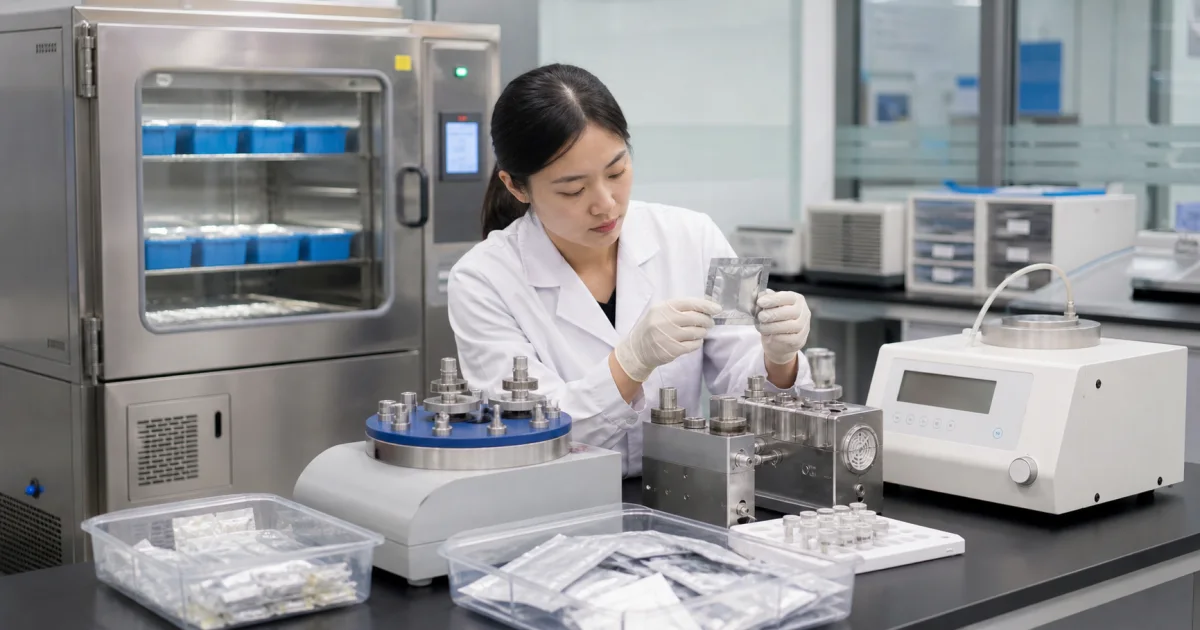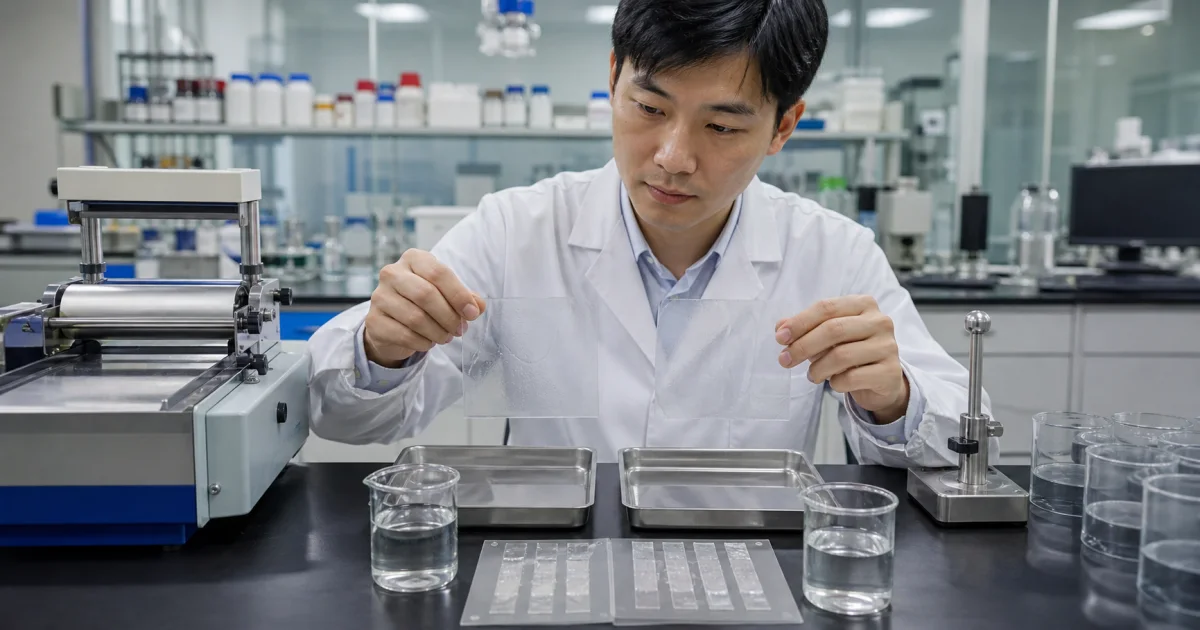
ODF roll blocking occurs when film layers, or the film and release liner, adhere too strongly during winding, storage or conversion. Blocking can stretch, tear, curl or delaminate an orodispersible film as it unwinds. It can also interrupt slitting and sachet packing. The solution requires control of residual moisture, plasticizer, surface condition, winding tension, temperature and liner release—not merely a stronger pull.
Why ODF rolls become difficult to unwind
Thin films may remain tacky when residual moisture or plasticizer is high. Hygroscopic ingredients can absorb additional moisture after drying. Warm roll storage increases polymer mobility, while excessive winding pressure forces surfaces into closer contact.
Flavor oils and low-molecular-weight ingredients can migrate toward the surface. A film that releases cleanly immediately after casting may block after conditioning or accelerated storage.
Blocking factors and controls
| Factor | Possible effect | Development control |
|---|---|---|
| Residual moisture | Tack and layer adhesion | Drying profile and conditioned moisture range |
| Plasticizer level | Soft surface and migration | Mechanical and surface evaluation |
| Winding tension | Excess roll pressure or wrinkles | Taper-tension and roll-build study |
| Roll temperature | Warm film blocks during storage | Cooling before winding and controlled storage |
| Release coating | Too weak or too strong adhesion | Peel-force testing with the final formula |
| Surface contamination | Localized sticking or defects | Cleanliness and filtration controls |
Select the liner with the final film formula
Release liners differ in base material, coating chemistry, surface energy, thickness and dimensional stability. A liner that works for one polymer or flavor system may fail with another. Selection should use the final formulation, wet thickness, dryer profile and storage conditions.
The liner must release consistently without transferring coating components to the ODF. It also needs sufficient stiffness and flatness for web handling. Supplier data is a starting point, not a substitute for pilot trials.
Measure release force over time
Peel or release testing should define sample width, angle, speed and conditioning. Test fresh rolls and aged samples at several temperatures and humidities. Record both force and failure behavior: smooth release differs from jerking, stretching or film residue on the liner.
Across-web sampling is important because drying and coating may vary from edge to center. Beginning, middle and end-of-roll results can reveal winding-pressure or temperature effects.
Control winding and storage
Film should reach an appropriate temperature and moisture condition before winding. Core diameter, tension profile, roll length and storage orientation affect pressure. Very large rolls may create higher internal stress than pilot reels.
Maximum hold time before slitting should be defined. Protective wrapping and humidity-controlled storage can reduce environmental exposure, but cannot correct an unstable formula.
Link blocking to downstream yield
Track web breaks, edge damage, dust, dimensional change and rejected sachets during conversion. A slightly higher release force may be acceptable if it is smooth and stable; a variable force can create registration errors even when the average is moderate.
OEM checklist
- Approve polymer, plasticizer, flavor and liner grades together.
- Define residual-moisture and conditioning targets.
- Validate release force after aging and humidity exposure.
- Record winding tension, roll temperature and roll length.
- Sample edge, center and multiple roll positions.
- Monitor film stretching, tearing and sachet-line rejects.
- Require change control for liner coating or supplier changes.
Frequently asked questions
Can more drying always prevent blocking?
No. Overdrying can make ODF brittle or curled. Moisture, plasticizer and liner interaction must be balanced.
Does a lower release force always improve processing?
No. Extremely low adhesion may allow movement or premature separation. Consistent, controlled release is the goal.
Can liner selection change disintegration?
Indirectly, yes, if coating transfer, surface damage or moisture changes alter the finished film.
Related resources: ODF casting-defect guide, residual-moisture testing, ODF slitting accuracy and private-label ODF manufacturing.